
Every November my skin staged a quiet protest.
Not dramatic — no rashes, no obvious reaction. Just a gradual tightening that started around my cheeks, a flakiness along my jawline that foundation couldn’t cover, and a dullness that made me look tired regardless of how much sleep I’d had. I’d apply moisturizer in the morning and by midday my face felt like it needed another application. By January it was rough to the touch in patches.
I tried heavier moisturizers, I tried face oils, I tried drinking more water, which does essentially nothing for skin surface hydration regardless of what wellness content tells you. Nothing made a meaningful difference for more than a few hours.
The shift happened when I stopped thinking about dry skin as a moisturizer problem and started thinking about it as a layering problem. Korean skincare didn’t give me a better moisturizer — it gave me a completely different philosophy about how hydration works. And that philosophy, applied consistently, changed my skin more in eight weeks than the previous three years of heavier and heavier creams had managed.
Dry Skin vs Dehydrated Skin — The Distinction That Changes Everything
Most people use these terms interchangeably. They mean different things and the distinction matters for choosing the right products.
Dry skin is a skin type — a genetic predisposition where your skin produces less sebum than average. It’s a structural characteristic that makes your skin naturally less effective at retaining moisture. You can improve dry skin significantly with the right routine but you can’t permanently change the underlying type.
Dehydrated skin is a condition — temporary lack of water in the skin that can affect any skin type including oily. It’s caused by external factors: weather, heating and air conditioning, harsh cleansers, over-exfoliation, not enough water intake, or an impaired barrier that can’t hold moisture effectively.
Many people have both simultaneously — genuinely dry skin that’s also dehydrated. Korean skincare addresses both through the same layered hydration approach which is part of why it works so well for this particular skin situation.
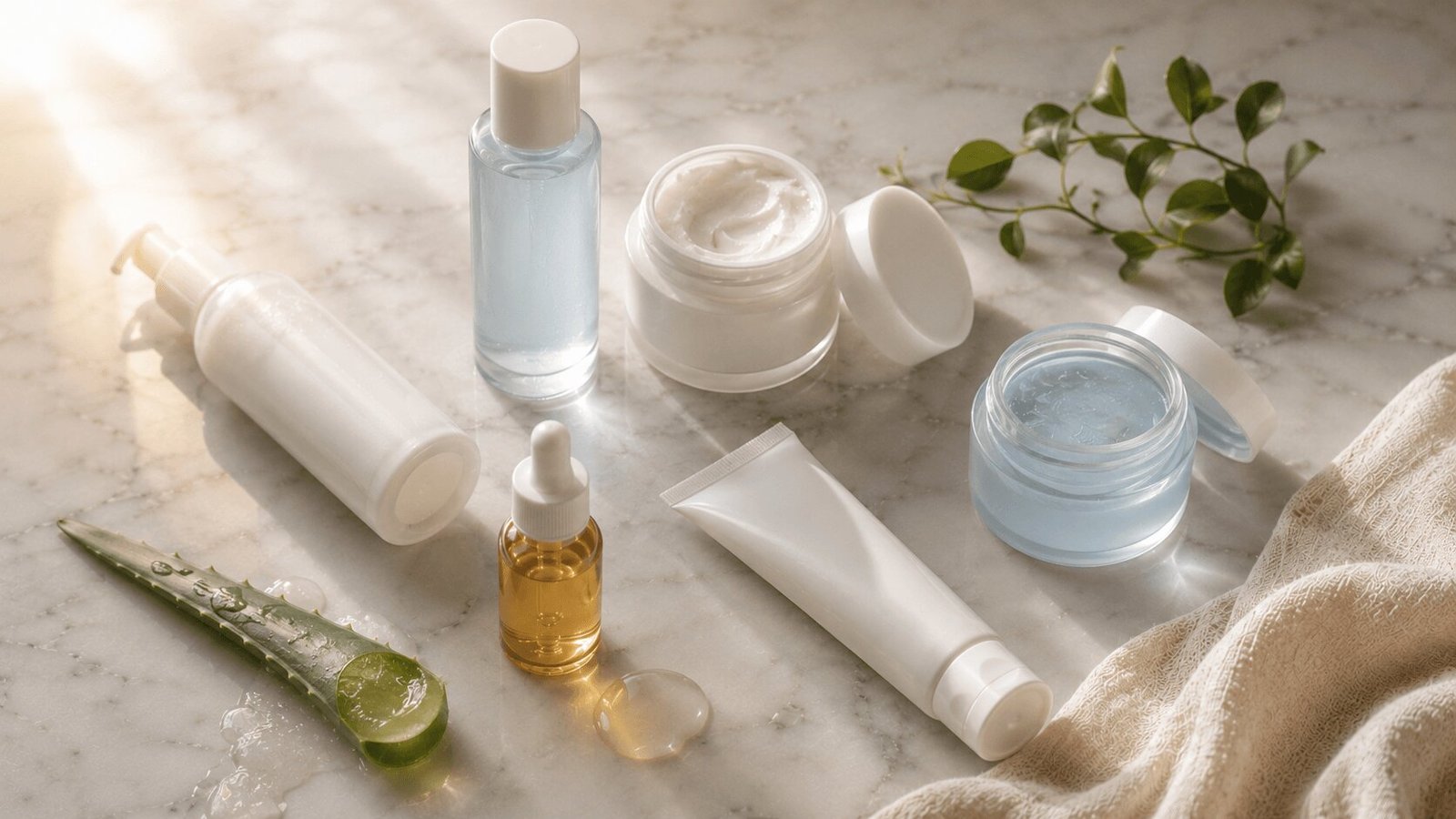
Dry skin often feels tight, flaky, or rough because it naturally produces less oil and struggles to retain moisture. Korean skincare is ideal for dry skin because it layers hydration, supports the moisture barrier, and locks in nourishment with every step.
Why Korean Skincare Is Specifically Excellent for Dry Skin
The Korean approach to hydration isn’t about applying one very rich product and hoping it’s enough. It’s about building multiple thin layers of different types of hydrating ingredients that work together — each one supporting and amplifying the ones before it.
Toners prep your skin to absorb moisture, essences hydrate deeply, and serums deliver targeted ingredients like hyaluronic acid to lock in moisture. This philosophy prevents overwhelming your skin by giving it everything it needs for lasting hydration.
For dry skin this multi-layer approach is transformative because it addresses hydration at multiple depths simultaneously rather than relying on a single product to do everything.
There’s also the barrier repair focus. If your dry skin has reached the point where your barrier feels genuinely compromised my complete guide on how to fix a damaged skin barrier covers the full recovery process before starting a regular routine.
Part of what causes problems for those with dry skin is a weak protective barrier that loses moisture and leaves skin susceptible to irritation or redness. Korean skincare repairs and strengthens that barrier through ceramides, squalane, and centella asiatica — ingredients that lock in moisture and create a protective shield.
The Korean Dry Skin Routine — Step by Step
This routine is built around maximum hydration at every step with barrier support as the consistent thread throughout.
If you are building your first Korean skincare routine from scratch my Korean skincare routine for beginners covers all the foundational steps before you customize specifically for dry skin.
Morning Routine
Step 1 — Oil Cleanser or Water Rinse
Dry skin should never use a foaming cleanser in the morning. You haven’t been exposed to anything overnight that requires a full cleanse — just residue from your evening products. A brief lukewarm water rinse is completely sufficient and the least stripping option available.
If you prefer using a cleanser in the morning — an oil cleanser applied briefly and rinsed off removes residue without disrupting your acid mantle. It sounds counterintuitive to use an oil-based product on already dry skin but oil cleansers emulsify with water and rinse off completely, leaving skin balanced rather than greasy.
Never use hot water. Dry skin is often caused or worsened by hot showers and harsh cleansers — hot water dissolves the lipid layer of your skin barrier more effectively than it dissolves anything else. Lukewarm water always.
Step 2 — Hydrating Toner — Two to Three Layers
This is where the Korean approach to dry skin diverges most dramatically from Western routines.
Pour a small amount of hydrating toner into your palms and press it gently into your skin. Wait thirty seconds. Repeat. Do this two to three times before moving to the next step.
Each thin layer of toner absorbs more effectively than one thick application. By the time you’ve applied three layers your skin feels genuinely different — plumper, more comfortable, more receptive to everything that follows.
The Pyunkang Yul Essence Toner is my consistent first recommendation for dry skin — minimal ingredients, concentrated botanical hydration, zero fragrance. The Torriden Dive-In Toner with its multi-weight hyaluronic acid delivers focused moisture at multiple depths and is particularly effective for very dehydrated dry skin. I covered both in detail in my guide on the best Korean toners — the dry skin section there gives a full comparison.
Step 3 — Hydrating Essence
Snail mucin has been a deeply hydrating and reparative ingredient in Korean skincare for years, packed with hyaluronic acid, glycoproteins, and antioxidants that hydrate, repair, and soothe dry damaged skin.
The COSRX Advanced Snail 96 Mucin Power Essence is the most consistently recommended product in my routine for dry skin at any price point. The 96% snail secretion filtrate delivers hydration that feels different from standard moisturizer hydration — deeper, more plump, more lasting. I covered why snail mucin works so well in my Korean skincare ingredients explained guide.
I cover this product alongside every other major COSRX formula in my full COSRX skincare review — including which ones work best specifically for dry skin types.
Apply after toner, before serum, using the same palm-patting technique.
Step 4 — Hyaluronic Acid Serum
For dry skin specifically, layering a dedicated hyaluronic acid serum between essence and moisturizer adds a meaningful additional hydration depth that neither product alone achieves.
The Torriden Dive-In Low Molecule Hyaluronic Acid Serum uses five molecular weight sizes simultaneously — large molecules on the surface, progressively smaller ones penetrating deeper. The result is hydration that feels like it’s coming from inside the skin rather than sitting on top of it.
One important note — apply hyaluronic acid to slightly damp skin and follow immediately with moisturizer. HA is a humectant that pulls moisture from its environment. In a dry climate or air-conditioned room it will pull from your skin if there’s no moisture locked on top of it.
Step 5 — Rich Ceramide Moisturizer
For dry skin the moisturizer is the most important single product in your routine — but its effectiveness depends entirely on everything applied underneath it.
Ceramides are non-negotiable for dry skin. Using key ingredients like ceramides, hyaluronic acid, panthenol, and cica helps restore softness, comfort, and long-lasting hydration for dry skin. Ceramides are the lipids that form the barrier’s structure — replenishing them topically directly supports the barrier’s ability to hold moisture in.
The ILLIYOON Ceramide Ato Concentrate Cream is one of the best value ceramide moisturizers available on Amazon — rich without being heavy, absorbs within a minute, and produces consistent improvement in how dry skin feels throughout the day after two to three weeks of consistent use.
The Dr. Jart Ceramidin Cream is the premium recommendation — a more sophisticated ceramide formula with a skin-feel that I haven’t found replicated at a lower price point. Worth the investment for severely dry skin that hasn’t responded to more affordable options. I covered both in my Laneige skincare review context — comparing how premium brands approach dry skin moisturization differently from mid-range options.
For tight budgets — the Etude House SoonJung Panthenol Rescue Cream at around $14 delivers barrier repair with panthenol that keeps dry skin comfortable throughout the day. I mentioned it consistently in my affordable Korean skincare under $20 guide as the best budget option for dry and barrier-damaged skin.
Step 6 — Hydrating Sunscreen (Essential)
Sunscreen for dry skin needs to be either hydrating in formula or at minimum non-drying. Many chemical sunscreens contain alcohol which is particularly problematic for dry skin.
The Beauty of Joseon Relief Sun SPF 50+ remains the top recommendation — it contains rice extract and probiotics alongside the SPF protection, the texture is serum-like rather than cream-like, and it doesn’t pull moisture from already dry skin the way some formulas do. The Round Lab Birch Juice Moisturizing Sun Cream is specifically formulated for dry skin with its birch sap base — moisturizing and protective simultaneously.
For dry skin that is also showing signs of aging my dedicated guide on Korean anti-aging skincare covers the additional steps and ingredients that address both concerns simultaneously.
Evening Routine
Evening for dry skin is about intensive repair and maximum hydration delivery while your skin does its natural overnight renewal work.
Step 1 — Double Cleanse
Oil cleanser first — essential for removing sunscreen thoroughly without stripping. The Heimish All Clean Balm is excellent for dry skin because it leaves skin feeling nourished rather than stripped after rinsing.
Follow with a gentle water-based cleanser briefly. For dry skin the second cleanse should be the most minimal possible — just enough to clear any remaining residue, not a thorough foam cleanse.
Step 2 — Essence or Treatment
The COSRX Snail Mucin Essence again — twice daily use during dry skin periods is completely appropriate and beneficial. For very dry skin that needs intensive repair the iUNIK Beta-Glucan Power Moisture Serum adds ceramide-supporting and barrier-repair ingredients that complement the snail mucin beautifully.
On exfoliation evenings — which for dry skin should be maximum once weekly rather than the twice to three times appropriate for oily skin — apply your exfoliant here and skip other actives. PHA is the most appropriate exfoliant for dry skin. AHA at low concentration once weekly is acceptable once your skin is stable but start with PHA first.
Step 3 — Rich Moisturizer
Use a richer version of your morning moisturizer or add a facial oil after your cream moisturizer. Squalane — available as a standalone product from brands like COSRX and Timeless — is the best oil for dry skin because it most closely mimics the skin’s natural sebum and absorbs without greasiness.
Apply squalane as the last step after moisturizer. It creates a light occlusive layer that slows moisture evaporation overnight without the heaviness of Vaseline.
Step 4 — Slugging (Weekly Treatment)
Once or twice weekly apply a thin layer of plain Vaseline as the absolute final step after moisturizer and oil. This technique — widely used in Korean skincare communities — creates a complete occlusive barrier that prevents any transepidermal water loss overnight.
The skin you wake up with after slugging is noticeably different. Plumper, softer, more even. It looks like you’ve slept for twelve hours even if you’ve slept for six. For dry skin in winter this technique is one of the most immediately effective things you can do.
Step 5 — Sleeping Mask (Two to Three Times Weekly)
The Laneige Water Sleeping Mask used two to three times weekly delivers the most intensive overnight hydration treatment available at its price point. Apply over your moisturizer and sleep in it. Morning skin quality improvement is consistently the most dramatic single change most dry skin people notice after adding this step.
I covered it in full in my guide on the best Korean sheet masks on Amazon — it earns the overnight mask category recommendation consistently.
Best Korean Products for Dry Skin — Quick Reference
| Product | Category | Why Perfect for Dry Skin |
|---|---|---|
| Pyunkang Yul Essence Toner | Toner | Pure botanical hydration minimal ingredients |
| Torriden Dive-In Hyaluronic Serum | Serum | Multi-weight HA deep layered hydration |
| COSRX Snail Mucin 96 Essence | Essence | Repair and hydration combined |
| ILLIYOON Ceramide Ato Cream | Moisturizer | Rich ceramide barrier rebuilding |
| Dr. Jart Ceramidin Cream | Moisturizer | Premium ceramide for severely dry skin |
| Etude SoonJung Panthenol Cream | Moisturizer | Budget barrier repair |
| Round Lab Birch Juice Sun Cream | Sunscreen | Moisturizing SPF specifically for dry skin |
| Beauty of Joseon Relief Sun | Sunscreen | Serum-light non-drying SPF |
| Laneige Water Sleeping Mask | Overnight mask | Most effective overnight hydration treatment |
| COSRX Squalane | Facial oil | Barrier sealing final step |
All of these are consistently popular Korean skincare products on Amazon with thousands of verified reviews from dry skin users who have tested them long term.
The Moisture Sandwich Technique
This is the single most effective technique for severely dry skin and it’s underused outside of Korean skincare communities.
Apply your hydrating toner to slightly damp skin immediately after patting your face dry — don’t wait until skin is completely dry. Follow immediately with your essence. Follow immediately with moisturizer while skin is still slightly damp from the essence.
The damp-skin application at each step allows the subsequent layer to absorb more deeply rather than sitting on the surface. The layering while still slightly damp from the previous step seals each layer before it can evaporate.
For very dry skin this technique produces results on the first use that feel noticeably different from applying the same products to dry skin. It takes about thirty seconds of attention to the timing — completely worth the difference in outcome.
Ingredients Dry Skin Needs Most
Ceramides — the lipids that form your barrier structure. Non-negotiable for dry skin. Look for them high on moisturizer ingredient lists.
Hyaluronic acid — at multiple molecular weights for layered depth hydration. Paired with an occlusive to seal it in.
Glycerin — one of the most effective humectants available. Inexpensive and extraordinarily good at drawing water into skin. Should appear in almost every product you use for dry skin.
Panthenol (Vitamin B5) — deeply hydrating, barrier-repairing, anti-inflammatory. Appears in Etude SoonJung products specifically because of its documented efficacy for barrier repair.
Squalane — plant-derived oil that mimics skin’s natural lipids. Non-comedogenic, absorbs well, creates protective occlusive layer.
Snail mucin — natural glycoprotein complex with repair and hydration properties particularly well-suited to dry and barrier-compromised skin.
Centella asiatica — anti-inflammatory botanical that soothes the chronic mild irritation that often accompanies persistently dry skin.
Mistakes That Make Dry Skin Worse
Hot showers and face washing.
Hot water dissolves the lipid layer of your skin barrier — the same mechanism by which it dissolves grease on dishes. This is the mistake I made every winter morning for years that was undoing my evening routine before I’d even applied anything. Lukewarm water only, every time.
Foaming cleansers with sulfates.
Sodium lauryl sulfate and similar surfactants are too stripping for dry skin. They produce that squeaky clean feeling by removing your natural oils and barrier lipids. Switch to a gentle oil cleanser or cream cleanser — the non-lather formula feels insufficient at first and produces dramatically better skin within two weeks.
Applying moisturizer to completely dry skin.
Moisturizer applied to dry skin has less to work with. Apply to skin that’s still slightly damp from the previous step for consistently better results.
Under-moisturizing to avoid looking greasy.
Dry skin that’s properly moisturized doesn’t look greasy — it looks healthy. The greasy look comes from oil-heavy products applied without proper layering. A well-formulated ceramide cream applied over layered water-based products absorbs completely and produces a plump comfortable finish rather than greasiness. Properly hydrated dry skin is also the foundation required before pursuing a glass skin routine — you cannot build that reflective glow on a dehydrated surface.
Exfoliating too frequently.
More exfoliation is never the answer for dry skin. Removing dead cells more aggressively than your skin can replenish them leaves the barrier compromised and skin more dehydrated. Once weekly maximum — with PHA or low-concentration lactic acid rather than stronger acids.
If you experience both dryness and breakouts simultaneously my guide on Korean skincare for acne prone skin covers how to balance both concerns in one routine without compromising either.
Skipping sunscreen because it feels drying.
Find a hydrating Korean SPF and use it daily. UV damage impairs the barrier’s moisture-retention ability over time which worsens dry skin. Protecting the barrier while repairing it simultaneously is more effective than either approach alone. If you need help choosing read my guide on the best Korean sunscreen for oily skin — the hydrating options I cover there work equally well for dry skin.
Dry skin is also more prone to post-inflammatory marks and uneven tone — my guide on Korean skincare for dark spots covers how to address hyperpigmentation alongside your hydration routine.
FAQs About Korean Skincare for Dry Skin
How many steps does dry skin need in a Korean routine?
Dry skin benefits from more steps than oily skin — the layering builds the hydration that one or two steps can’t achieve alone. A five to six step morning routine and six to seven step evening routine is appropriate for genuinely dry skin.
Can dry skin use snail mucin?
Yes — snail mucin is one of the best ingredients for dry skin. It hydrates, repairs, and supports barrier function simultaneously without any drying effect.
How long until Korean skincare improves dry skin?
Initial comfort improvement — skin feeling less tight — typically happens within the first week of proper layered hydration. Visible texture and barrier improvement takes four to six weeks. Full improvement for significantly compromised dry skin can take three to four months of consistency.
Is Korean skincare safe for dry sensitive skin?
Yes — Korean skincare is particularly well suited for dry sensitive skin because of its emphasis on barrier support and gentle ingredients. I cover the specific approach for sensitive skin in my dedicated guide on Korean skincare for sensitive skin.
Should dry skin use facial oil?
Yes — a lightweight oil like squalane or jojoba used as the final step after moisturizer provides occlusive protection that significantly improves how long hydration lasts. Apply after moisturizer, not instead of it.
What Actually Changed
The winters after switching to Korean skincare for dry skin don’t look like the winters before.
My cheeks don’t tighten by midday anymore. The flaky patches along my jawline disappeared within the first month and haven’t returned. My skin looks consistently hydrated in a way that photographs differently — not because I edit photos but because adequately hydrated skin catches light differently than perpetually dehydrated skin.
None of that came from finding a better moisturizer. It came from understanding that dry skin needs hydration built in layers — toner, essence, serum, moisturizer, occlusive — not applied in one thick coat and hoped for.
The Korean routine works for dry skin because it matches what dry skin actually needs — consistent layered moisture replenishment at every step, barrier support throughout, and enough patience to let the skin normalize rather than perpetually chasing emergency hydration.
Start with the toner and essence layering. Add the ceramide moisturizer. Use the sleeping mask twice weekly. Give it six weeks.
Your skin knows how to be hydrated. It just needs you to give it the right tools and the right technique to get there.
7 thoughts on “Korean Skincare for Dry Skin — Best Products and Routine for Deep Hydration”