
I found my first forehead line on a Tuesday morning in February.
If you need to know about more best and trending skincare products on Amazon you should must check my this guide on Korean skincare products on Amazon.
Not a deep wrinkle — just a faint crease that appeared when I raised my eyebrows and, crucially, didn’t fully disappear when I stopped. I stood at the bathroom mirror raising and lowering my eyebrows several times like someone doing a very specific facial exercise, trying to convince myself it was a lighting issue.
It wasn’t a lighting issue.
I was thirty-one, I knew logically that skin aging is a normal biological process. I also knew, standing at that mirror, that I had essentially done nothing proactive about it for the previous decade beyond occasionally remembering to wear sunscreen.
The next three months involved a significant amount of research, some expensive mistakes, and eventually landing on Korean skincare as the approach that made the most sense — not because of dramatic promises, but because of a philosophy I hadn’t encountered before. The Korean approach isn’t about reversing aging aggressively. It’s about slowing it down intelligently. And that distinction turns out to make all the difference.
The Korean Philosophy of Slow Aging
Western anti-aging skincare has historically operated on a correction model — find the wrinkle, target it aggressively, use the strongest possible active ingredient to make it go away. Retinoids at high concentrations, chemical peels, treatments that create visible peeling as evidence that something dramatic is happening.
Korean skincare operates on a completely different premise. While Western skincare often targets existing wrinkles with aggressive actives, K-beauty focuses on maintaining skin health through hydration layers, gentle actives at lower concentrations, and barrier protection. This slow aging approach often delivers more sustainable results with less irritation.
The practical difference is significant. Aggressive Western anti-aging often creates a cycle of irritation, barrier damage, and inflammation — all of which actually accelerate visible aging rather than reversing it. Chronic inflammation is now understood to be one of the primary drivers of collagen breakdown — a concept sometimes called inflammaging.
Korean anti-aging starts with the premise that healthy, well-hydrated, barrier-intact skin ages more slowly than treated-but-damaged skin. Get the foundations right — barrier support, consistent hydration, daily SPF — and then layer in targeted actives at concentrations that work without causing the inflammatory response that undermines the whole project.
This approach requires more patience. It also produces skin that looks consistently better throughout the process rather than alternating between dramatically better and visibly irritated. If you want to know about glass skin routine of Koreans you can check my Korean glass skin routine guide.
The Real Cause of Skin Aging — And What Actually Helps
Before any product recommendations, this is worth understanding because it changes which products you prioritize and if you want to know about acne prone skin you can check my guide about Korean skincare for acne prone skin.
UV damage causes approximately 80% of visible facial aging. A landmark 2013 study in the Annals of Internal Medicine showed daily sunscreen users had 24% less skin aging than occasional users. No serum, cream, or treatment can match the anti-aging benefit of consistent SPF protection.
That statistic should reorganize how you think about anti-aging spending. If you’re buying expensive peptide serums but skipping sunscreen on cloudy days — you’re spending money on the 20% while ignoring the 80%.
Beyond UV damage the other primary aging drivers are:
Loss of collagen and elastin — natural production declines from around age twenty-five. Ingredients like retinol, peptides, and vitamin C support collagen synthesis but cannot fully replace declining natural production.
Barrier breakdown — as the skin barrier weakens with age it holds moisture less efficiently. Dehydrated skin shows fine lines and texture more prominently. This is where Korean skincare’s emphasis on barrier health is directly anti-aging rather than just cosmetically beneficial.
Chronic inflammation — repeated irritation from harsh products, UV exposure, pollution, and stress drives collagen breakdown over time. The soothing anti-inflammatory approach of Korean skincare addresses this actively.
Reduced cell turnover — skin renews itself more slowly with age leading to dull, uneven texture. Gentle exfoliation helps — but the Korean approach uses lower concentrations over time rather than aggressive treatments that cause the inflammatory response mentioned above.
The Korean Anti-Aging Routine — Step by Step
This routine is organized around the Korean slow aging philosophy — barrier first, targeted actives second, SPF always. If you are new to Korean skincare you can check my Korean skincare routine for beginners guide.
Morning Routine
Step 1 — Gentle Low pH Cleanser
Morning cleansing for anti-aging skin should be brief and gentle. You are not removing significant buildup — just refreshing skin and preparing it for what follows. A harsh morning cleanse strips the barrier before you’ve even started building it back up.
The COSRX Low pH Good Morning Gel Cleanser remains my recommendation here — I covered it in full in my COSRX skincare review. Low pH formula, brief application, no tightness afterward. For mature and dry skin specifically, lukewarm water rinse without cleanser is also completely acceptable.
Step 2 — Hydrating Essence or Toner
Hydration layering is the foundation of Korean anti-aging. Plump, well-hydrated skin shows fine lines and wrinkles significantly less than dehydrated skin — before any active ingredient has done anything.
Snail mucin is uniquely rich in glycoproteins, hyaluronic acid, and glycolic acid — making it an all-in-one hydrator, repairer, and gentle exfoliant. For mature skin losing its natural moisture-retention capacity, snail mucin is particularly valuable because it helps rebuild the skin’s natural moisturizing factors. Layered under hyaluronic acid, it forms a plumping one-two punch that mimics the look of younger skin.
The COSRX Advanced Snail 96 Mucin Power Essence is the first product I’d add to any anti-aging routine regardless of budget. The combination of hydration, repair, and gentle cell-supporting action makes it uniquely valuable for mature skin.
Step 3 — Vitamin C Serum (Optional but Powerful)
Vitamin C is one of the most well-researched anti-aging ingredients available. It stimulates collagen synthesis, provides antioxidant protection against UV-triggered free radical damage, and brightens the uneven pigmentation that accumulates with age.
Use it in the morning only — vitamin C provides antioxidant protection against daytime UV and pollution exposure that makes morning application significantly more effective than evening.
The Beauty of Joseon Glow Serum — which combines niacinamide and propolis rather than vitamin C — is an excellent alternative for anyone whose skin finds pure vitamin C irritating. Niacinamide firms and brightens through different mechanisms and is considerably gentler.
Step 4 — Moisturizer
For anti-aging purposes your moisturizer should do more than hydrate — it should actively support barrier function and ideally contain peptides or ceramides.
The Laneige Water Bank Blue Hyaluronic Cream — which I covered in detail in my Laneige skincare review — is one of the best mid-range anti-aging moisturizers available on Amazon. The blue hyaluronic acid technology delivers deeper and longer-lasting hydration than standard HA, and the squalane content mimics the skin’s natural lipids that decline with age.
For a more affordable option the Etude House SoonJung Panthenol Rescue Cream provides excellent barrier support with panthenol — a deeply researched skin repair ingredient that maintains skin resilience as it ages.
Step 5 — SPF 50+ Every Morning Without Exception
This is where most people’s anti-aging routine succeeds or fails.
The Anua Heartleaf and Panthenol Silky Moisture Mild Sunscreen SPF 50+ is one of the best Korean sunscreens for anti-aging — its SPF 50+ broad-spectrum protection guards against both UVA the wrinkle-makers and UVB the sunburn villains making it a true anti-aging powerhouse.
I cover Korean sunscreen options in full detail in my guide on the best Korean sunscreen for oily skin — the recommendations there apply equally to anti-aging regardless of skin type. The key requirement for anti-aging is SPF 50+ with PA++++ rating which indicates maximum UVA protection.
Apply generously. Reapply at midday if you’re outdoors. This one step done consistently for twelve months will produce more visible anti-aging benefit than any serum you apply underneath it.
Evening Routine
Evening is when the most significant anti-aging work happens — both from the products you apply and from your skin’s own overnight repair processes.
Step 1 — Double Cleanse
Remove sunscreen thoroughly. Sunscreen left overnight combined with the skin’s natural repair processes creates a congested environment that counteracts everything else in your routine. Oil cleanser first, gentle water cleanser second.
Step 2 — Exfoliation (Two to Three Times Weekly)
Cell turnover slows significantly with age — by your thirties skin renews itself roughly 35 to 45% more slowly than it did at twenty. Gentle chemical exfoliation accelerates this process, revealing fresher skin surface and improving the absorption of everything applied afterward.
For anti-aging skin specifically, PHA and low-concentration AHA are the most appropriate options. They exfoliate effectively without the irritation risk of high-concentration AHA or BHA. The Some By Mi AHA BHA PHA 30 Days Miracle Toner is an excellent gentle exfoliating toner — start twice weekly and assess how your skin responds before increasing frequency.
Never exfoliate on retinol nights. Choose one or the other per evening.
Step 3 — Retinol or Retinoid (The Gold Standard)
Retinol is the most extensively researched topical anti-aging ingredient available. It accelerates cell turnover, stimulates collagen production, reduces the appearance of existing fine lines, and improves skin texture over consistent use.
It also has a learning curve that most people handle badly by starting too aggressively.
For Korean skincare beginners to retinol — the Some By Mi Retinol Intense Reactivating Serum at 0.1% concentration is the appropriate starting point. Apply a pea-sized amount to dry skin after cleansing, two nights per week for the first month. Increase frequency gradually over three to four months as your skin builds tolerance.
What to expect in the first four to six weeks: mild flaking, possible temporary dryness, potential mild irritation at application sites. This is the adjustment period that most people misinterpret as an allergic reaction and stop too early. The results — improved texture, reduced fine lines, more even skin tone — begin appearing at weeks eight through twelve and continue improving for up to six months of consistent use.
Do not use retinol if your skin barrier is currently compromised. Repair the barrier first — my guide on how to fix a damaged skin barrier explains that process fully — then introduce retinol once your skin is stable.
Step 4 — Peptide Serum or Essence
Peptides signal your skin to produce more collagen — essentially sending a message that collagen has broken down and needs replacing. The response is genuine increased collagen synthesis, which over time reduces the depth of fine lines and improves skin elasticity.
The Beauty of Joseon Revive Eye Serum contains a peptide complex specifically formulated for the delicate eye area where fine lines typically appear first. Applied with the ring finger — the weakest finger and therefore least likely to cause traction damage to thin eye skin — patted gently around the orbital bone rather than rubbed.
The COSRX Advanced Snail Peptide Eye Cream combines snail mucin with peptides for a dual hydration and collagen-signaling effect at the eye area.
Step 5 — Rich Moisturizer or Sleeping Mask
Evening moisturizer for anti-aging skin should be richer than morning to support overnight repair. Ceramides and peptides in the formula provide the barrier-building and collagen-supporting ingredients that work with the skin’s natural overnight renewal cycle.
Once or twice weekly replace your regular moisturizer with the Laneige Water Sleeping Mask as an intensive overnight treatment. The concentrated hydration it delivers overnight produces morning skin quality that regular moisturizer alone doesn’t match — plumper, more even, more luminous. I mentioned this in my guide to the best Korean sheet masks as the best overnight mask available.
Best Korean Anti-Aging Products on Amazon
| Product | Category | Key Anti-Aging Benefit |
|---|---|---|
| COSRX Snail 96 Mucin Essence | Essence | Hydration repair collagen support |
| Beauty of Joseon Glow Serum | Serum | Niacinamide brightening firming |
| Some By Mi Retinol Intense Serum | Treatment | Cell turnover collagen production |
| Beauty of Joseon Revive Eye Serum | Eye treatment | Peptides for fine lines |
| COSRX Snail Peptide Eye Cream | Eye cream | Hydration and peptide repair |
| Laneige Water Bank Blue Hyaluronic Cream | Moisturizer | Deep plumping hydration |
| Laneige Water Sleeping Mask | Overnight mask | Intensive overnight repair |
| Anua Heartleaf Panthenol Sun SPF 50+ | Sunscreen | UV protection number one anti-aging |
| Some By Mi AHA BHA PHA Toner | Exfoliant | Cell turnover brightening |
| Mediheal Collagen Impact Essential Mask | Sheet mask | Weekly collagen treatment |
All available on Amazon. For building this routine on a budget — my guide on affordable Korean skincare under $20 covers which products to prioritize when you can’t buy everything at once.
The Anti-Aging Ingredients That Actually Work
Understanding what’s in your products helps you choose wisely and avoid spending money on ingredients with weak evidence. You can also check my Korean Skincare Ingredients Explained guide.
Retinol — the most evidence-backed topical anti-aging ingredient. Accelerates cell turnover, stimulates collagen, reduces fine lines. Requires patience and a careful introduction. Worth it.
Peptides — signal skin to produce collagen. Multiple studies support their efficacy at reducing fine line depth over consistent use. Gentler than retinol with no adjustment period. Excellent for sensitive skin that can’t tolerate retinol. If you need to know more about Korean skincare of sensitive skin you should check my guide about Korean skincare for sensitive skin.
Adenosine — appears frequently in Korean anti-aging formulas and is less discussed than retinol or peptides but has genuine research supporting its collagen-stimulating and fine-line reducing properties. Look for it in the ingredients list of Korean anti-aging serums.
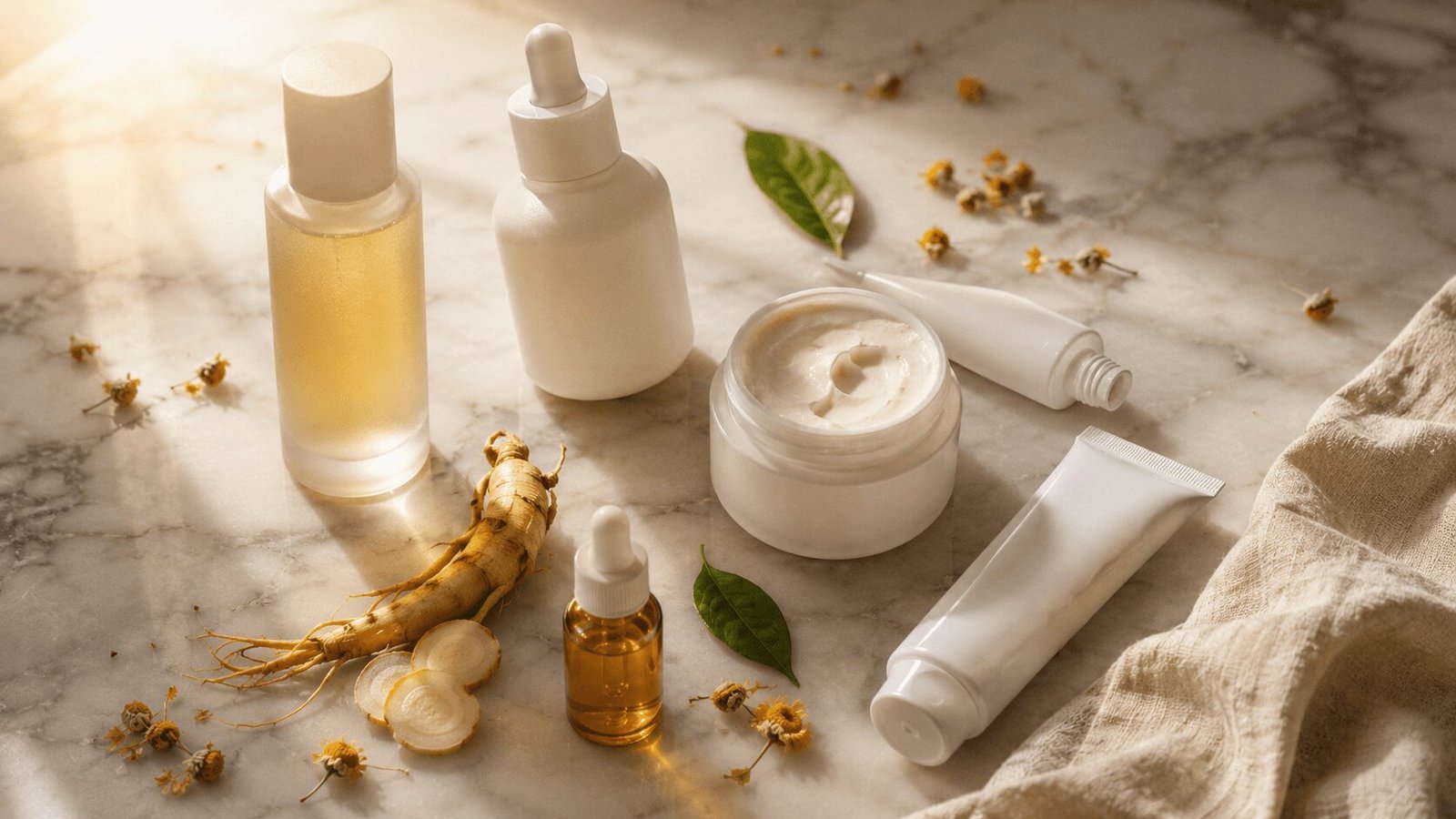
Ginseng — a prized ingredient in traditional Korean medicine renowned for its revitalizing properties. Traditional herbal ingredients like ginseng renowned for its circulation-boosting properties are expertly combined with scientifically-proven actives like retinoids and peptides in modern Korean formulations. Antioxidant protection and circulation support make it a genuinely useful anti-aging ingredient rather than just a marketing term.
Niacinamide — firms skin, reduces pore appearance, brightens post-inflammatory pigmentation, and regulates sebum — all relevant for aging skin. Works for virtually all skin types and concentrations. Gentle enough for daily use.
Snail Mucin — repair, hydration, and gentle cell-supporting action. Particularly valuable for mature skin that has lost natural moisture retention.
Vitamin C — antioxidant protection against UV-triggered damage, collagen synthesis stimulation, brightening. Morning use gives maximum benefit. Choose stable formulations — vitamin C oxidizes quickly in poorly formulated products.
What doesn’t work: Collagen molecules in creams are too large to penetrate the skin surface. Topical collagen is a moisturizer, not a collagen builder. Peptides signal collagen production — that’s what to look for on labels instead.
Mistakes That Age Skin Faster
Skipping sunscreen — the biggest mistake by a significant margin. Every day without adequate SPF is a day of UV damage accumulating. This is not recoverable — photoaging from UV is permanent even if it becomes less visible with treatment. Apply SPF 50+ every morning regardless of weather or whether you’re going outside.
Using too many actives simultaneously. Retinol, AHA, BHA, vitamin C, niacinamide, and two peptide serums all at once creates compounding irritation that causes inflammation — which drives collagen breakdown. Two to three actives maximum. Introduce one at a time.
Aggressive exfoliation. More exfoliation does not mean faster results. It means a damaged barrier, chronic inflammation, and accelerated aging. Gentle exfoliation twice weekly is the correct approach for long-term results.
Not moisturizing enough. Dehydrated skin shows every line more prominently. A well-moisturized face looks years younger than the same face dehydrated — not because the lines are gone but because plump skin reflects light differently and lines sit differently in it. Moisturize morning and evening without exception.
Treating neck and décolletage differently from face. Skin aging in these areas is identical to face aging and responds to the same products. Extend everything from your routine — SPF, moisturizer, serum — below your jawline consistently.
When to Start Korean Anti-Aging Skincare
In your twenties: Prevention is the entire strategy. SPF every day. Solid barrier support. Basic hydration. This is the highest-leverage decade for anti-aging investment because you’re preventing damage rather than treating it.
In your thirties: Add one targeted active. Retinol or a peptide serum — not both simultaneously. Continue with SPF and barrier support as the foundation.
In your forties and beyond: Introduce both retinol and peptides, potentially at higher concentrations if your skin has built tolerance. Consider adding a dedicated eye treatment. The foundation principles — SPF, barrier, hydration — matter more than ever.
The consistent thread across every age group is this: the most expensive anti-aging serum in the world underperforms against a simple routine that includes SPF every morning. Start there. Everything else builds on that foundation.
FAQs About Korean Anti-Aging Skincare
At what age should I start anti-aging skincare? Prevention starts in your early twenties with SPF and barrier support. Targeted actives like retinol and peptides are typically introduced in the late twenties to early thirties when cell turnover begins slowing noticeably.
Is Korean anti-aging skincare better than Western options?
Korean skincare excels at the foundational elements — barrier support, layered hydration, gentle actives — that support long-term skin health. Western skincare has stronger prescription-grade options like tretinoin. The most effective approach combines both philosophies.
How long before I see anti-aging results?
SPF results accumulate over months and years. Retinol typically shows visible results from week eight to twelve. Peptides and hydration improvements are visible within two to four weeks. Anti-aging is a long-term project — consistent six to twelve month routines produce the most meaningful visible change.
Can I use retinol with Korean skincare products?
Yes. Retinol works well within a Korean skincare routine. Apply it after cleansing and before moisturizer on evenings when you’re not exfoliating. Avoid combining retinol with AHA or BHA on the same evening.
Is ginseng in Korean skincare actually effective?
Yes — ginseng has genuine antioxidant and circulation-supporting properties with research backing its efficacy. It’s not as dramatic as retinol or peptides but it contributes meaningfully to overall skin health in formulations where it appears high on the ingredient list.
The Long Game
The Tuesday morning that started all of this feels very different from this side of a consistent Korean anti-aging routine.
The forehead line that caused mild panic is still there — I’m not going to pretend otherwise. But my skin overall looks significantly better than it did before I started. More even. More hydrated. That specific quality of healthy skin that’s harder to describe than it is to notice.
What changed wasn’t a miracle product. It was understanding that anti-aging skincare is fundamentally about supporting skin health consistently over time — not finding the most aggressive treatment and hoping the results outweigh the damage.
SPF every morning. Barrier support daily. Gentle targeted actives consistently. Sheet masks weekly. Patience throughout.
Your skin is doing the work already. The routine just needs to stop getting in the way and start supporting it properly.
6 thoughts on “Korean Anti-Aging Skincare — Best Products and Routine to Look Younger”