
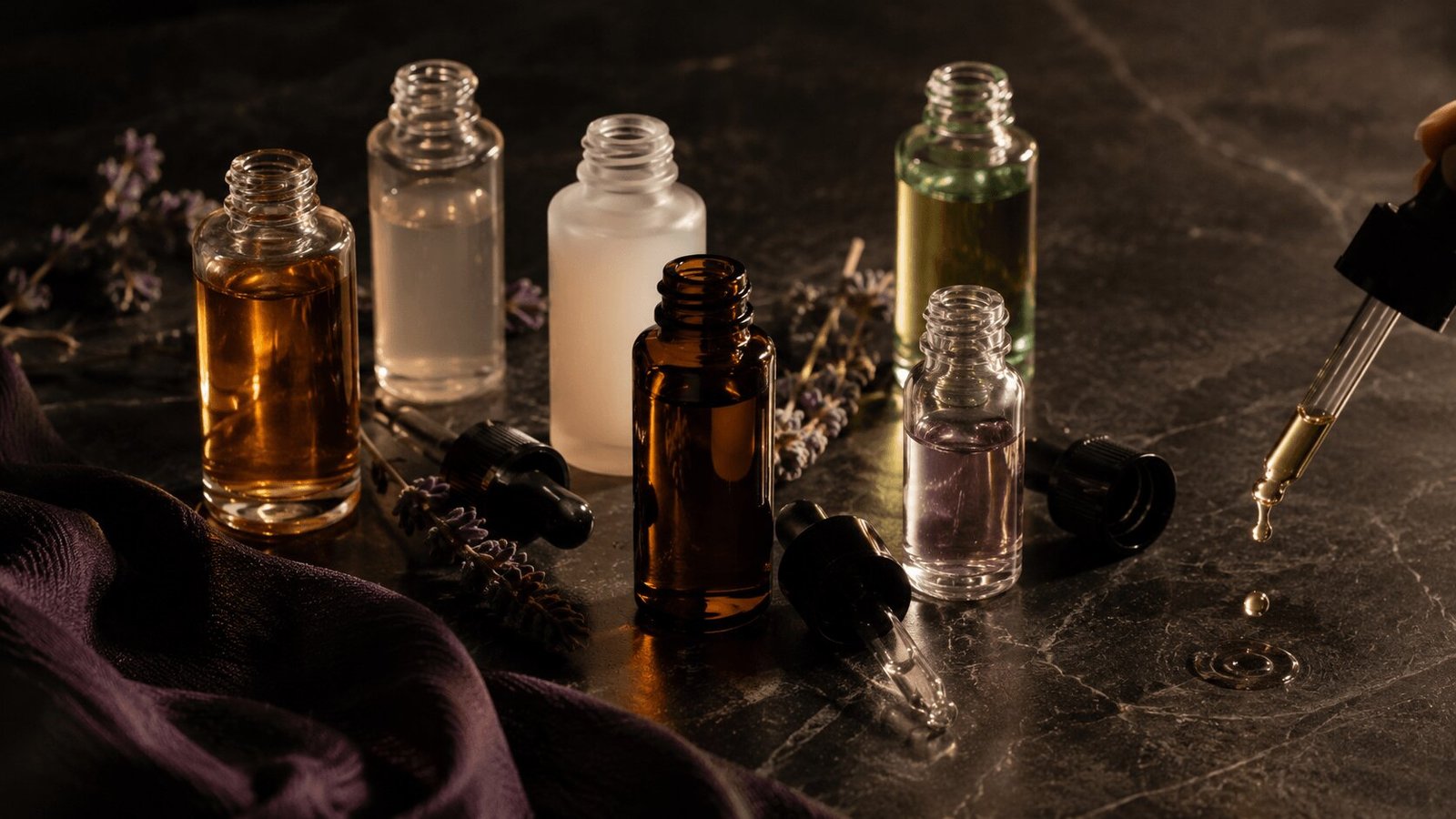
My bathroom shelf used to have eleven serums on it.
Eleven. I counted them one Sunday morning while looking for a specific one and genuinely couldn’t find it among the others. Some were half-used and forgotten. A couple had separated and gone slightly off-color in the bottle. One I’d bought because an influencer used it in a get-ready-with-me video and I had no idea what it was actually supposed to do for my skin.
The chaos wasn’t a hydration problem or a budget problem. It was a knowledge problem. I’d been buying serums the way you’d buy snacks at a checkout line — impulsively, based on packaging and vague promises, with zero understanding of what concentration of what ingredient I was actually applying or why.
Once I sat down and actually learned what each serum category does — and more importantly, which concerns each ingredient genuinely addresses versus which ones are mostly marketing — my shelf went from eleven bottles to four. And my skin looked better with four than it ever did with eleven.
Here is everything I wish I’d understood before that first impulsive serum purchase — organized by what you’re actually trying to fix.
What a Serum Actually Does
Serums are lightweight skincare products applied after cleansing and toning and before moisturizing. They contain a high concentration of active ingredients that address specific skin concerns — pigmentation, hydration, uneven texture, or skin aging — and they’re easy to layer onto your routine to customize it for your skin’s specific needs.
The key word there is concentration. A toner might contain 1% niacinamide as one ingredient among many. A dedicated niacinamide serum might contain 5% or 10% as the star ingredient with a formula built specifically to deliver it effectively. That’s the difference — serums are where you go when you have a specific concern that needs a specific, concentrated answer.
This is also why serums sit in the middle of your routine — after toner and essence have prepped your skin, before moisturizer seals everything in. Choosing the right moisturizer for this final step matters just as much as the serum itself — I cover every option by skin type in my guide on the best Korean moisturizers on Amazon.
Apply serum to prepared, slightly damp skin and the active ingredients absorb significantly better than applying to bare or dry skin. I cover exactly how toners prep skin for this step in my guide on the best Korean toners — the better your toner layering, the more effectively every serum afterward performs.
The Korean philosophy with serums focuses on long-term benefits and being gentle to skin versus harsh, overnight results that risk irritation. This is the lens through which every recommendation below should be read — these aren’t products promising dramatic overnight transformation. They’re products that, used consistently, produce results that compound over weeks and months.
How to Choose a Serum by Concern
Rather than organizing by skin type — which I’ve covered extensively in my guides on Korean skincare for dry skin, Korean skincare for sensitive skin, and Korean skincare for acne prone skin — this article organizes by what you’re actually trying to fix. Most people have one or two primary concerns, and the right serum addresses that concern specifically.
If you are completely new to Korean skincare and unsure where serums even fit my Korean skincare routine for beginners covers the full layering order from the ground up.
Hydration — hyaluronic acid, snail mucin, beta-glucan Brightening and dark spots — niacinamide, vitamin C, tranexamic acid, arbutin Anti-aging — retinol, peptides, adenosine Acne and inflammation — niacinamide, propolis, centella asiatica, tea tree Barrier repair — beta-glucan, ceramides, panthenol, centella
Most people need one serum from the hydration category as a foundation, plus one targeted serum for their primary concern. That’s it. Everything beyond that is enhancement, not necessity.
Best Korean Serums on Amazon — Reviewed by Concern
Best for Hydration — COSRX Advanced Snail 96 Mucin Power Essence
I’ve referenced this product across more articles on this blog than any other single item, and there’s a reason for that consistency — it’s genuinely the best starting point for anyone building a Korean skincare routine, regardless of skin type. I cover this product alongside every other major COSRX formula in my full COSRX skincare review — including which ones work best for specific skin concerns.
At 96% snail secretion filtrate, this delivers glycoproteins, hyaluronic acid, and antioxidants that hydrate, repair, and soothe simultaneously. It works on all skin types, costs around $19, and addresses multiple concerns at once rather than just one.
What makes it different from a typical serum is its breadth. Most serums on this list target one specific concern. This one provides a hydration and repair foundation that makes every other serum you layer on top of it perform better. If you only buy one product from this entire article, this is it. This is also the foundation step I recommend in my glass skin routine guide — that reflective glow simply isn’t achievable without this kind of layered hydration underneath everything else.
Price: Around $19 Best for: All skin types — foundational hydration and repair Layering position: After toner, before targeted serums Amazon availability: ✅ Prime shipping
Best for Pure Hydration Depth — Torriden Dive-In Low Molecule Hyaluronic Acid Serum
For skin that needs hydration at multiple depths rather than the broader repair focus of snail mucin — Torriden’s approach using five different molecular weights of hyaluronic acid simultaneously creates layered hydration that single-weight HA serums don’t achieve.
Large molecules sit on the surface creating an immediate moisture film. Progressively smaller molecules penetrate deeper layers. The combined effect is hydration that feels like it’s coming from within the skin rather than sitting on top of it.
I covered this in detail in my guide on Korean skincare for dry skin — for severely dehydrated skin or anyone who’s found standard hyaluronic acid products underwhelming, this is the upgrade that tends to produce results where others haven’t.
Price: Around $20 Best for: Dehydrated skin, anyone needing deeper hydration than HA alone provides Layering position: After essence, before moisturizer Amazon availability: ✅ Prime shipping
Best for Brightening — Beauty of Joseon Glow Serum
At just $17 for 30ml, this is one of the most consistently recommended Korean serums for good reason. Infused with propolis extract and niacinamide, it brightens, soothes, and calms blemish-prone skin while anti-inflammatory botanicals target redness and irritation.
The lightweight, non-sticky texture makes layering effortless, and the glow-boosting effects are visible within weeks of consistent use. I covered this serum throughout my guide on Korean skincare for dark spots — the niacinamide content interrupts melanin transfer to skin cells, gradually reducing the visibility of existing marks while the propolis provides antimicrobial benefits that help prevent new ones from forming.
Apply after toner and before moisturizer. The honest caveat: the scent is noticeable to some users, and the glass packaging requires careful handling — but the formula itself is one of the best value brightening serums available.
Price: Around $17 Best for: Dull skin, post-acne marks, acne-prone or sensitive skin wanting gentle brightening Layering position: After toner, before moisturizer Amazon availability: ✅ Prime shipping
Best High-Concentration Niacinamide — Anua Heartleaf 10% Niacinamide Serum
Niacinamide is arguably the best all-around skincare active available today — it works for virtually every concern: oily skin, dry skin, hyperpigmentation, large pores, uneven texture, fine lines, and acne. There’s no other single ingredient that addresses such a wide range of concerns with such a strong safety profile.
For stubborn marks that haven’t responded fully to the gentler concentration in Beauty of Joseon’s Glow Serum, stepping up to a 10% niacinamide formula like Anua’s provides a more pronounced effect. I mentioned this serum in my guide on Korean skincare for dark spots as the option for marks that need a stronger push.
At higher concentrations, introduce gradually — every other day for the first two weeks — to assess tolerance before daily use.
Price: Around $19 Best for: Stubborn hyperpigmentation, enlarged pores, oily skin wanting sebum regulation Layering position: After toner or essence, before moisturizer Amazon availability: ✅ Prime shipping
Best for Acne and Active Breakouts — Skin1004 Madagascar Centella Ampoule
Pure centella asiatica at high concentration — this ampoule’s anti-inflammatory action reduces the redness and swelling of active breakouts while supporting the skin’s repair processes simultaneously.
I covered this extensively in my guide on Korean skincare for acne prone skin as the recommendation for non-exfoliation evenings — its calming effect on active inflammation is something I’ve found more immediately noticeable than almost any other product in my routine during flare-ups.
What makes it particularly valuable for acne-prone skin is that it addresses the inflammatory component of breakouts without any of the drying or irritating side effects of traditional acne treatments. Gentle enough for daily use, effective enough to make a visible difference within the first week of consistent application.
Price: Around $19 Best for: Active breakouts, redness, post-inflammatory calming Layering position: After cleansing, before moisturizer — works well as a standalone treatment step Amazon availability: ✅ Prime shipping
Best Beginner Retinol — Some By Mi Retinol Intense Reactivating Serum
Retinol remains the most extensively researched topical anti-aging ingredient available, but it has a learning curve that most people handle badly by starting too aggressively.
This serum at a beginner-appropriate concentration is the product I recommend for anyone introducing retinol into a Korean skincare routine for the first time. I cover the full introduction schedule in my Korean anti-aging skincare guide and again in my Korean skincare night routine guide — starting at two nights per week, expecting mild flaking in the first month, and gradually building tolerance over three to four months.
The results — improved texture, reduced fine lines, more even tone — begin appearing around weeks eight through twelve and continue improving for up to six months of consistent use. This is a long game product, not a quick fix.
Price: Around $18 Best for: Anti-aging beginners, fine lines, texture improvement Layering position: Evening only, after cleansing, on a rotating schedule with exfoliation Amazon availability: ✅ Prime shipping
Best for Stubborn Dark Spots — Skin1004 Tranexamic Acid Serum
Tranexamic acid works differently from niacinamide — it inhibits the enzyme that triggers melanin overproduction rather than blocking melanin transfer or providing antioxidant protection.
I covered this in my guide on Korean skincare for dark spots as the ingredient that genuinely surprised me — particularly effective for older, established hyperpigmentation that niacinamide alone hasn’t fully addressed. The cumulative effect over eight to twelve weeks on stubborn marks is significant.
Use on evenings when you’re not exfoliating, alongside or alternating with niacinamide for a more comprehensive brightening approach — two gentle mechanisms working together typically outperform either alone.
Price: Around $19 Best for: Older established hyperpigmentation, melasma support, marks resistant to niacinamide alone Layering position: Evening, non-exfoliation nights Amazon availability: ✅ Prime shipping
Best for Barrier Repair — iUNIK Beta-Glucan Power Moisture Serum
Beta-glucan doesn’t get the attention it deserves considering how well it performs. This serum centers on oat-derived beta-glucan with ceramides and centella — hydrating deeply, supporting barrier function, and soothing inflammation simultaneously.
I covered this in my Korean skincare ingredients explained guide and again in my guide on Korean skincare for sensitive skin — for anyone whose skin has been compromised by over-treatment or harsh products, this serum provides the barrier-supporting benefits of a ceramide product in a lightweight format that doesn’t feel heavy.
For skin currently in recovery — this and the COSRX Snail Mucin Essence together, with nothing else, is a legitimate simplified routine that addresses repair without introducing any additional irritation risk. If your skin is in recovery from over-treatment my complete guide on how to fix a damaged skin barrier covers the full process this simplified routine fits into.
Price: Around $18 Best for: Compromised barrier, sensitive skin, post-over-exfoliation recovery Layering position: After cleansing, can be used both morning and evening Amazon availability: ✅ Prime shipping
Best Eye Area Treatment — Beauty of Joseon Revive Eye Serum
The eye area has thinner, more delicate skin than the rest of your face and benefits from a dedicated peptide treatment that the rest of your routine doesn’t fully address.
This serum’s peptide complex is specifically formulated for the orbital area. I covered it in my Korean anti-aging skincare guide and again in my Korean skincare night routine guide — apply with your ring finger, patting gently rather than rubbing, as the final treatment step before your eye cream or moisturizer reaches that area.
For anyone over thirty-five, or anyone noticing the first signs of fine lines around the eyes, this is the targeted addition that the rest of this list doesn’t cover.
Price: Around $17 Best for: Fine lines around eyes, under-eye hydration, early anti-aging prevention Layering position: After serum, before moisturizer — eye area specifically Amazon availability: ✅ Prime shipping
Best Premium Hydration — Laneige Water Bank Blue Hyaluronic Serum
I covered this in detail in my Laneige skincare review — the blue hyaluronic acid technology delivers deeper and longer-lasting hydration than standard hyaluronic acid, paired with squalane that mimics the skin’s natural lipids.
The honest budget consideration I raised in that review still applies here: the COSRX Snail Mucin Essence delivers comparable hydration and barrier benefits for roughly a third of the price. The Laneige serum earns its premium specifically for dry skin that’s found snail mucin insufficient — the blue HA technology provides a noticeably different depth of hydration for skin that needs more.
Price: Around $42 to $45 Best for: Dry skin needing an upgrade from standard hyaluronic acid, premium routine seekers Layering position: After essence, before moisturizer Amazon availability: ✅ Prime shipping
Quick Reference — Which Serum for Which Concern
| Concern | Recommended Serum | Price |
|---|---|---|
| General hydration foundation | COSRX Snail 96 Mucin Essence | $19 |
| Deep hydration upgrade | Torriden Dive-In Hyaluronic Serum | $20 |
| Gentle daily brightening | Beauty of Joseon Glow Serum | $17 |
| Stronger pore/tone correction | Anua Heartleaf 10% Niacinamide | $19 |
| Active breakouts and redness | Skin1004 Centella Ampoule | $19 |
| Beginner anti-aging | Some By Mi Retinol Intense Serum | $18 |
| Stubborn dark spots | Skin1004 Tranexamic Acid Serum | $19 |
| Barrier repair | iUNIK Beta-Glucan Serum | $18 |
| Eye area fine lines | Beauty of Joseon Revive Eye Serum | $17 |
| Premium dry skin hydration | Laneige Water Bank Blue Hyaluronic | $42 |
For anyone building this on a budget — nearly everything on this list except the Laneige option fits comfortably within my guide on affordable Korean skincare under $20, and all of these serums are among the most popular Korean skincare products on Amazon right now
How to Layer Multiple Serums
This is where my eleven-bottle shelf went wrong, and it’s where most people overcomplicate their routines unnecessarily.
General rule — thinnest to thickest. Watery serums before gel-textured ones, gel before cream-like formulas. Apply, wait thirty to sixty seconds for absorption, then apply the next.
Morning vs evening separation. Vitamin C and niacinamide work well in the morning alongside sunscreen — providing antioxidant protection through the day. Retinol and tranexamic acid belong in the evening. This naturally limits how many serums you’re using at any single time. For the sunscreen that pairs best with your morning serum step my guide on the best Korean sunscreen for oily skin covers the top options that layer well without pilling.
I cover the complete morning lineup including exactly where vitamin C and niacinamide fit in my Korean skincare morning routine guide.
Maximum two to three active serums per routine. Beyond this, you’re not adding benefit — you’re adding irritation risk and diminishing returns. A hydration serum plus one targeted serum is sufficient for most concerns. For an additional weekly hydration boost beyond your daily serums my guide on the best Korean sheet masks covers the most concentrated treatment options available.
Don’t combine retinol with AHA/BHA or vitamin C on the same night. This combination creates irritation that slows results rather than accelerating them — I covered this rule in detail in my Korean skincare night routine guide. Alternate nights instead.
Patch test new serums individually. When introducing a new serum, use it alone for the first week before adding it to a fuller routine — this is the only way to identify which product causes a reaction if one occurs.
Serum Mistakes Worth Avoiding
Buying based on what an influencer used, not what your skin needs. This was my eleven-bottle mistake exactly. A serum that works brilliantly for someone else’s specific concern may do nothing for yours — or worse, may not suit your skin type at all.
Expecting results within days. Korean skincare philosophy focuses on long-term benefits rather than harsh, overnight results. Niacinamide and tranexamic acid take six to eight weeks minimum to show meaningful change. Retinol takes eight to twelve weeks. Patience is part of the formula working correctly, not a sign it isn’t.
Applying serum to completely dry skin. Serum absorbs significantly better on skin that’s still slightly damp from your toner or essence step. This thirty-second timing detail makes a measurable difference to how effectively the active ingredients penetrate.
Using too many actives simultaneously. More serums layered together doesn’t mean more results — it means more potential irritation and an inability to identify what’s actually working. Two to three active serums maximum, introduced one at a time.
Storing serums incorrectly. Vitamin C and retinol both degrade with light and air exposure. Keep them in their original packaging, away from direct sunlight, and replace if the formula changes color or separates — an oxidized vitamin C serum can actually worsen the hyperpigmentation it was meant to fix.
FAQs About Korean Serums
What’s the difference between a serum, essence, and ampoule?
Essences are the lightest and most watery, designed to hydrate and prep skin for absorption. Serums sit in the middle — concentrated active ingredients in a lightweight format. Ampoules are the most concentrated, sometimes described as “serums of serums,” typically used for short, intensive periods rather than continuously.
Can I use a vitamin C serum and niacinamide serum together?
Yes — modern formulations are stable enough that these can be used together, either layered in the same routine or used at different times of day. If irritation occurs, separate them into morning (vitamin C) and evening (niacinamide) instead.
How many serums do I actually need?
One hydration-focused serum as your foundation, plus one targeted serum for your primary concern, is sufficient for most people. A third serum for a secondary concern is reasonable. Beyond three active serums, returns diminish significantly.
Do I need different serums for morning and evening?
Not necessarily, but it helps. Vitamin C and niacinamide are well-suited to morning use for their antioxidant and protective benefits. Retinol and tranexamic acid are better reserved for evening. Hydration-focused serums like snail mucin work well in both.
How long does a bottle of Korean serum last?
Most 20ml to 30ml bottles last two to three months with twice-daily use, or three to four months with once-daily evening-only use for products like retinol.
From Eleven Bottles to Four
The shelf I have now isn’t smaller because I gave up on serums. It’s smaller because I finally understood what each one was actually for.
A hydration foundation — the COSRX Snail Mucin Essence — that goes on every single day regardless of anything else. A brightening serum for the dark spots I’m still working on. A retinol for the fine lines that showed up around thirty-one. And an eye serum because the under-eye area genuinely needed its own attention.
Four bottles, each with a specific job, each chosen because I understood what it does and why my skin needed it — not because someone online made it look appealing in a thirty-second video.
That’s the real lesson here. Korean serums are genuinely excellent — concentrated, well-formulated, and consistently effective for the concerns they’re designed to address. The chaos comes from buying without understanding, not from the products themselves.
Pick one hydration serum. Pick one for your primary concern. Use both consistently for eight weeks. That’s the entire strategy — and it works considerably better than eleven bottles ever did.
1 thought on “Best Korean Serums on Amazon — Honest Reviews for Every Skin Concern”