
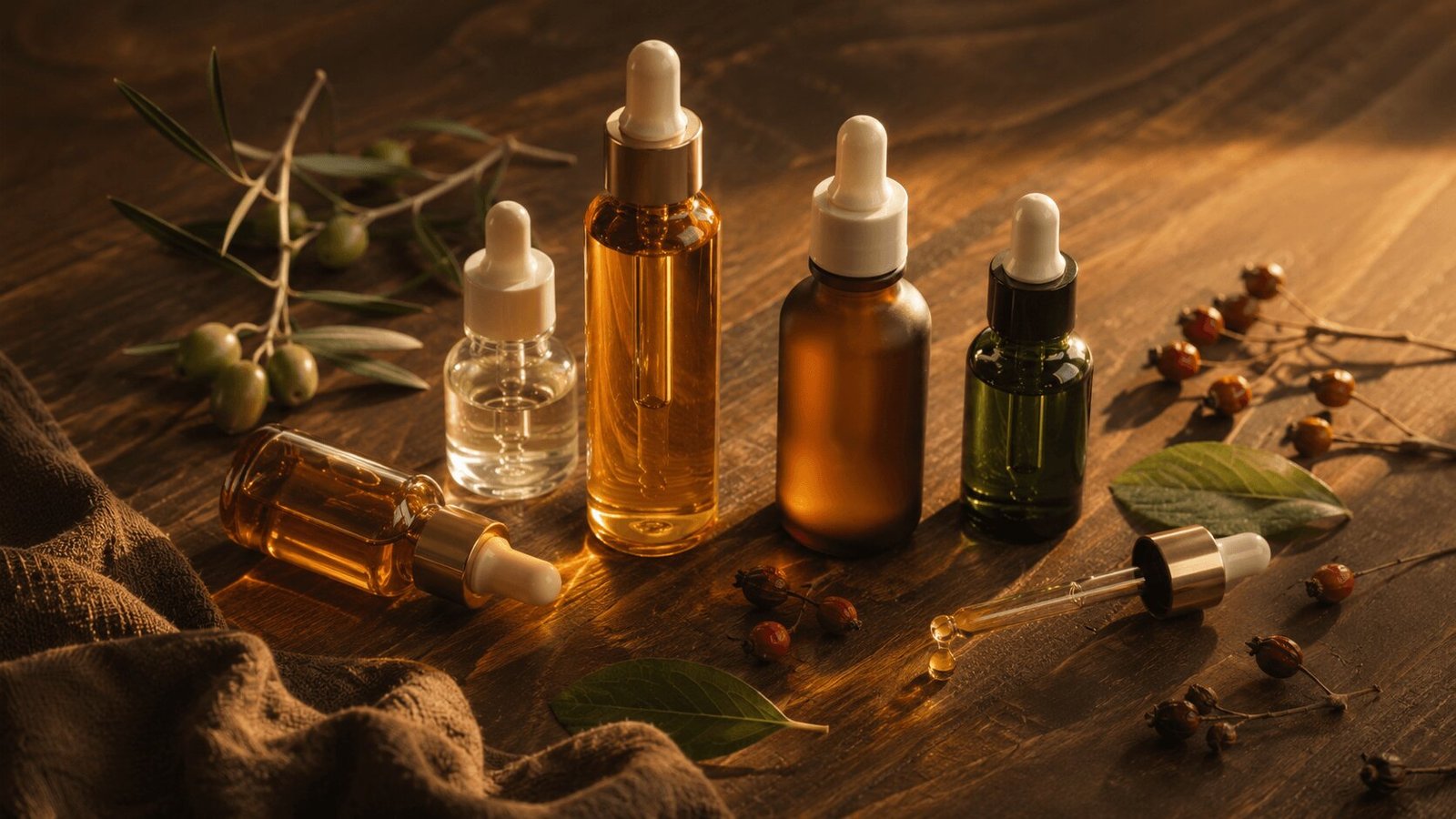
For three years I avoided face oil the way some people avoid spicy food — with a certainty that it would end badly and a vague suspicion that anyone who recommended it didn’t have skin like mine.
My skin runs combination to oily. My T-zone produces oil consistently regardless of season, hydration level, or what I ate the previous day. The idea of voluntarily applying more oil to it seemed like the kind of advice someone with dry skin gives without fully considering who they’re talking to.
The thing that changed my mind wasn’t persuasion. It was accidentally using my flatmate’s squalane — I mistook it for my serum in poor morning light, applied it, and spent the rest of the day waiting for my face to become a disaster. By evening my skin looked better than it had in weeks. More even, more comfortable, somehow less oily by midday than usual.
I looked up what squalane actually was and spent an embarrassing amount of time reading about why I’d been wrong about face oil for three years.
That was two years ago. Face oil has been part of my routine since and my skin has never looked better. Here is the honest guide I wish I’d had before the accidental discovery.
The Myth That Keeps Oily Skin Away From Face Oil
The belief that face oil causes oily skin is one of the most persistent and damaging myths in skincare — and it keeps one of the most useful product categories away from exactly the skin types that can benefit from specific oils.
Here is what’s actually happening: your skin produces oil (sebum) to protect and moisturize itself. When your skin barrier is compromised or dehydrated, sebum production increases to compensate. Using the right facial oil doesn’t add to this cycle — it interrupts it by providing the lipids your barrier needs externally so your skin stops producing compensatory sebum internally.
For skin whose barrier is already compromised my complete guide on how to fix a damaged skin barrier covers the recovery process — gentle facial oils like squalane are often recommended during barrier repair specifically.
Lightweight non-comedogenic oils like jojoba or squalane can actually balance oil production. The key is avoiding heavy oils and applying sparingly.
The distinction between comedogenic and non-comedogenic oils is what most people miss. Coconut oil is comedogenic — it blocks pores and causes breakouts on oily and acne-prone skin, which is where the “oil breaks you out” experience most people have comes from. Squalane is non-comedogenic — it absorbs completely, mimics the skin’s natural lipids, and causes essentially no pore-clogging at any realistic usage amount.
Getting the right oil for your skin type is the entire difference between a product that transforms your routine and one that causes the breakouts you were afraid of.
How Face Oil Fits Into Your Korean Skincare Routine
Before the product reviews — where oil sits in your routine determines how well it works.
Order: Face oil goes after moisturizer and before nothing — it’s the final step in your evening routine. Oil is occlusive: it creates a seal over everything applied before it that slows moisture evaporation overnight. I cover the complete evening layering sequence in my Korean skincare night routine guide.
Morning vs evening: Most face oils work best in the evening. In the morning, oil applied under sunscreen can cause pilling and affect the even distribution of your SPF. The exception is squalane — its ultra-lightweight texture absorbs fully enough to layer under morning products without issue. For the complete morning routine structure my Korean skincare morning routine guide covers exactly where squalane fits as the optional morning oil step.
For the best Korean sunscreens that layer comfortably over morning oil my guide on the best Korean sunscreen for oily skin covers every option that works well in this sequence.
Amount: One to three drops for the whole face. Face oil is concentrated — more doesn’t mean more benefit. Warm between your palms and press gently onto your face rather than rubbing.
Over-applying oil is one of the most common Korean skincare mistakes I cover in my dedicated mistakes guide — along with the comedogenic oil confusion that puts most people off face oil entirely.
Damp vs dry skin: Apply to slightly damp skin after your moisturizer while the skin is still slightly tacky. This helps the oil bond to the moisture beneath rather than sitting as a separate layer on top.
Face oil applied after a weekly sheet mask seals in the concentrated essence rather than letting it evaporate — my guide on the best Korean sheet masks covers how to incorporate this technique correctly.
If you are completely new to Korean skincare my Korean skincare routine for beginners covers the foundational layering order before you add face oil as an advanced final step.
Best Korean Face Oils on Amazon — Reviewed by Skin Type
Best for All Skin Types — COSRX Advanced Snail Mucin Power Oil
This is the oil I recommend first to anyone uncertain about where to start with Korean face oils — because it’s the formula most likely to produce results without risk regardless of skin type.
The formula combines squalane with snail secretion filtrate — delivering both the barrier-sealing benefits of the oil and the repair and hydration properties of snail mucin I cover extensively in my COSRX skincare review. The snail mucin component means this oil does more than seal — it actively repairs and brightens while it protects.
The texture sits somewhere between a serum and an oil — lighter than pure plant oils with better absorption than many heavier formulas. For anyone introducing a face oil into their Korean skincare routine for the first time, this is a very low-risk entry point.
Price: Around $23 Best for: All skin types — universal starting recommendation Comedogenic rating: Low Amazon availability: ✅ Prime shipping
Best for Oily and Combination Skin — Pure Squalane Oil
Squalane is the oil for oily and combination skin — full stop. One ingredient, no fillers, no fragrance — just 100% olive-derived squalane in a glass bottle. It’s a genuinely universal oil that works on everything from oily to eczema-prone skin and conflicts with nothing in your routine.
Squalane is derived from olives or sugarcane and closely mimics the squalene naturally produced by human sebaceous glands. Because it resembles what your skin already makes, it absorbs quickly and completely — no greasy residue, no pore clogging, no triggering additional sebum production.
For combination skin with an oily T-zone and drier cheeks — which I cover in full in my guide on Korean skincare for combination skin — squalane is the only facial oil I’d apply uniformly across both zones without adjustment.
Good Molecules Squalane Oil at around $10 to $12 is the best value option available. The Ordinary Squalane at around $10 is equally effective. Both are single-ingredient products — what you’re comparing is purely packaging preference and accessibility.
Price: Around $10 to $12 Best for: Oily, combination, acne-prone, all skin types Comedogenic rating: Zero — genuinely non-comedogenic Amazon availability: ✅ Prime shipping
Best for Dry and Sensitive Skin — Purito From Green Calming Oat Kernel Oil
For dry and sensitive skin that needs more nourishment than squalane alone provides — oat kernel oil delivers genuine barrier repair with an anti-inflammatory profile that suits the most reactive skin types. I cover the complete dry skin layering approach including where facial oil fits in my guide on Korean skincare for dry skin — oil as the final sealing step makes the biggest difference for genuinely dry skin types.
The formula uses oat oil alongside centella asiatica extract — combining the skin-calming properties of oat with the anti-inflammatory credentials of centella to produce a facial oil specifically designed for skin that needs gentle nourishment rather than aggressive treatment.
I cover centella’s role in Korean skincare in my Korean skincare ingredients explained guide — its anti-inflammatory properties make it particularly valuable as an oil base ingredient for sensitive skin that tends to react to more active formulations.
Price: Around $19 Best for: Dry, sensitive, eczema-prone, reactive skin Fragrance free: ✅ Yes Amazon availability: ✅ Prime shipping
Best for Dark Spots and Brightening — iUNIK Rosehip Plus Vitamin Synergy Serum
Good Molecules Pure Cold-Pressed Rosehip Seed Oil is an antioxidant-rich facial oil that brightens the look of skin and supports the skin’s moisture barrier for all skin types.
Rosehip oil contains naturally occurring vitamin A (retinol precursor) and vitamin C alongside linoleic acid — a combination that over consistent use produces meaningful improvement in skin tone, dark spots, and overall brightness. I cover the brightening approach in full in my guide on Korean skincare for dark spots — rosehip oil earns a specific mention there as a gentle overnight brightening addition.
The iUNIK formula combines rosehip with vitamin C and additional antioxidants rather than using plain rosehip — making it more effective as a brightening oil than pure rosehip alone. Apply one to two drops in your evening routine after moisturizer.
Important honest caveat: rosehip oil has a relatively high comedogenic rating for acne-prone skin. For clear skin pursuing brightening this is excellent — for acne-prone skin I’d recommend squalane instead and address dark spots through the niacinamide and tranexamic acid approach in my dark spots guide.
Price: Around $17 Best for: Dry to normal skin with dark spots or dull tone Evening use: Yes — some rosehip oils can oxidize with UV Amazon availability: ✅ Prime shipping
Best Anti-Aging Oil — Haruharu Wonder Black Rice Bakuchiol Serum Oil
Bakuchiol is the ingredient getting the most attention in 2026 Korean face oil development — and for good reason. Similar to retinol, bakuchiol reduces the appearance of fine lines, wrinkles, and uneven skin tone while promoting collagen production — but without causing skin irritation, redness, and dryness. It fits all skin types including normal, oily, combination and dry, and is especially well-suited to sensitive skin.
Haruharu Wonder’s Black Rice Bakuchiol combines the retinol-alternative with black rice extract — an antioxidant-rich ingredient with genuine skin tone-improving properties — alongside squalane as the base. The formula is more sophisticated than standalone bakuchiol oils because of the additional active ingredient support.
I cover bakuchiol alongside retinol in my Korean anti-aging skincare guide — for anyone who wants anti-aging benefits in an oil format without the irritation adjustment period of retinol, bakuchiol is the current best answer.
A gentle, pregnancy-safe bakuchiol oil delivers retinol-adjacent firmness and tone benefits without the irritation, while doubling as a nourishing facial oil.
Price: Around $22 Best for: Mature skin, retinol-sensitive skin wanting anti-aging, all skin types Fragrance free: ✅ Yes Amazon availability: ✅ Prime shipping
Best Budget Face Oil — Good Molecules Bakuchiol Oil Blend
A stripped-down three-ingredient face oil that delivers bakuchiol in the perfect carrier oil combination for oily skin. At $10, the value proposition is exceptional. The formula is simple to the point of elegance — no filler, no fragrance, nothing unnecessary.
Good Molecules offers skin-type specific bakuchiol blends — a dry skin version with camellia and sea buckthorn, and an oily skin version with baobab and rosehip. This formulation intelligence at a $10 price point is genuinely rare.
For anyone building their Korean skincare routine on a budget — which I cover comprehensively in my guide on Korean skincare on a budget — this is the face oil recommendation that delivers anti-aging oil benefits without spending more than necessary.
Price: Around $10 Best for: Budget-conscious shoppers wanting bakuchiol benefits Amazon availability: ✅ Prime shipping
Best Premium Option — Kiehl’s Midnight Recovery Concentrate
At the premium end for anyone wanting a more sophisticated evening oil treatment — this formula combines lavender essential oil (worth patch testing for sensitive skin), evening primrose, and squalane in a formula that produces consistently visible overnight skin quality improvement.
The honest note here: it contains lavender essential oil which I flag in my guide on Korean skincare ingredients to avoid as a potential irritant for sensitive and reactive skin. For non-reactive skin this is a genuinely luxurious and effective evening oil. For sensitive skin — the Purito oat oil above is the safer choice.
Price: Around $52 Best for: Normal to dry, non-reactive skin wanting premium treatment Amazon availability: ✅ Prime shipping
Quick Reference — Which Oil for Which Skin Type
| Skin Type | Recommended Oil | Price |
|---|---|---|
| All skin types universal | COSRX Snail Mucin Power Oil | $23 |
| Oily combination | Pure Squalane Oil | $10-$12 |
| Dry sensitive | Purito Calming Oat Oil | $19 |
| Dark spots brightening | iUNIK Rosehip Plus Vitamin | $17 |
| Anti-aging all types | Haruharu Bakuchiol Serum Oil | $22 |
| Budget option | Good Molecules Bakuchiol Blend | $10 |
| Premium treatment | Kiehl’s Midnight Recovery | $52 |
All of these are among the most popular Korean skincare products on Amazon right now — consistently well reviewed with thousands of verified users behind each recommendation.
Oils to Avoid for Acne-Prone Skin
This matters as much as knowing which oils to use — and it’s where most people’s bad experience with face oil originates.
Non-comedogenic is an imperfect metric and results can vary greatly between individuals. Always do further investigation on a formulation and patch test before full-face application
That said — consistently higher-comedogenic-rated oils for acne-prone skin include:
Coconut oil — comedogenic rating of 4 out of 5. The most common source of the “oil broke me out” experience. I cover this in detail in my guide on Korean skincare for acne prone skin — avoid coconut oil entirely on acne-prone facial skin.
Wheat germ oil — high in oleic acid which promotes comedone formation in pore-prone skin.
Flaxseed oil — similarly problematic for congestion-prone skin.
Olive oil (as a facial oil) — despite being the source of squalane, full olive oil is too heavy and moderately comedogenic for facial use on acne-prone skin.
Lower risk options for acne-prone skin: Squalane, jojoba, hemp seed, marula, sea buckthorn in small amounts, watermelon seed oil.
The general principle — high linoleic acid content (rosehip, hemp, watermelon seed) tends to be more appropriate for acne-prone skin than high oleic acid content (coconut, olive, argan).
How to Introduce Face Oil Without Causing Breakouts
Even non-comedogenic oils can cause temporary purging or adjustment reactions when first introduced. The safest approach:
Patch test first. Apply a few drops to your inner arm for two days before full face application — the standard protocol I cover in my Korean skincare for sensitive skin guide.
Start with every other evening. Not every night. Give your skin time to adjust to a new occlusive layer before daily use.
Use one to two drops maximum. Face oil is one of the most over-applied products in skincare. More doesn’t mean more benefit and excess oil sitting on the surface rather than absorbing does increase clogging risk.
Introduce as the only new product. Don’t add face oil the same week you’re introducing a new moisturizer or serum — if a reaction occurs you need to be able to identify the cause.
If breakouts occur — reduce amount before eliminating. Sometimes it’s not the oil that’s the problem but the amount. Halve the drops and give another two weeks before deciding the oil doesn’t work for your skin.
FAQs About Korean Face Oils
Can I use face oil if I have oily skin?
Yes — specifically squalane, which is non-comedogenic and can actually reduce compensatory sebum production over consistent use. Avoid heavier oils and coconut oil-based formulas.
When should I apply face oil — morning or evening?
Primarily evening for most oils. Squalane is the exception that works morning and evening. Oil in the morning under sunscreen can cause pilling with some SPF formulas.
For sensitive skin specifically choosing the right sunscreen to layer over morning squalane is important — my guide on the best Korean sunscreen for sensitive skin covers the gentlest options that work over an oil base.
How many drops should I use?
One to three drops for the whole face. Warm between your palms before pressing gently onto skin.
Is bakuchiol a true retinol replacement?
Bakuchiol produces similar collagen-stimulating and cell-turnover results to retinol but more gradually and without the adjustment period of irritation and peeling. For sensitive skin it’s a genuine useful alternative. For skin that tolerates retinol well, retinol at equivalent concentrations produces faster results.
Do I need a face oil if I already use a rich moisturizer?
Not necessarily — a rich ceramide moisturizer already provides occlusive protection. Face oil is most useful as an additional sealing step for very dry skin or for the targeted active ingredient benefits of rosehip or bakuchiol.
What Changed After Three Years of Avoiding It
The accidental squalane discovery didn’t just add a product to my routine. It corrected a three-year misunderstanding about how facial oils work — one that had kept a genuinely useful product category out of my routine based on a myth that doesn’t hold for non-comedogenic oils.
My skin with squalane consistently looks more even and comfortable than it did without it. Not dramatically different — not glass skin overnight — but meaningfully better in the steady, cumulative way that Korean skincare consistently produces when you find the right product for your specific situation.
Face oil is also one of the key finishing steps for achieving the luminous look I cover in my glass skin routine guide — the sealing and light-reflecting quality of a good facial oil contributes directly to that glow.
Start with squalane if you have oily or combination skin, Start with the Purito oat oil if you have dry or sensitive skin, Start with bakuchiol if anti-aging is your priority. Use one to three drops. Give it six weeks.
The face oil category is genuinely worth trying. Just make sure you’re trying the right one for your skin type — and not reaching for the coconut oil that gave you the bad experience in the first place.
1 thought on “Best Korean Face Oils on Amazon — Honest Reviews for Every Skin Type”