
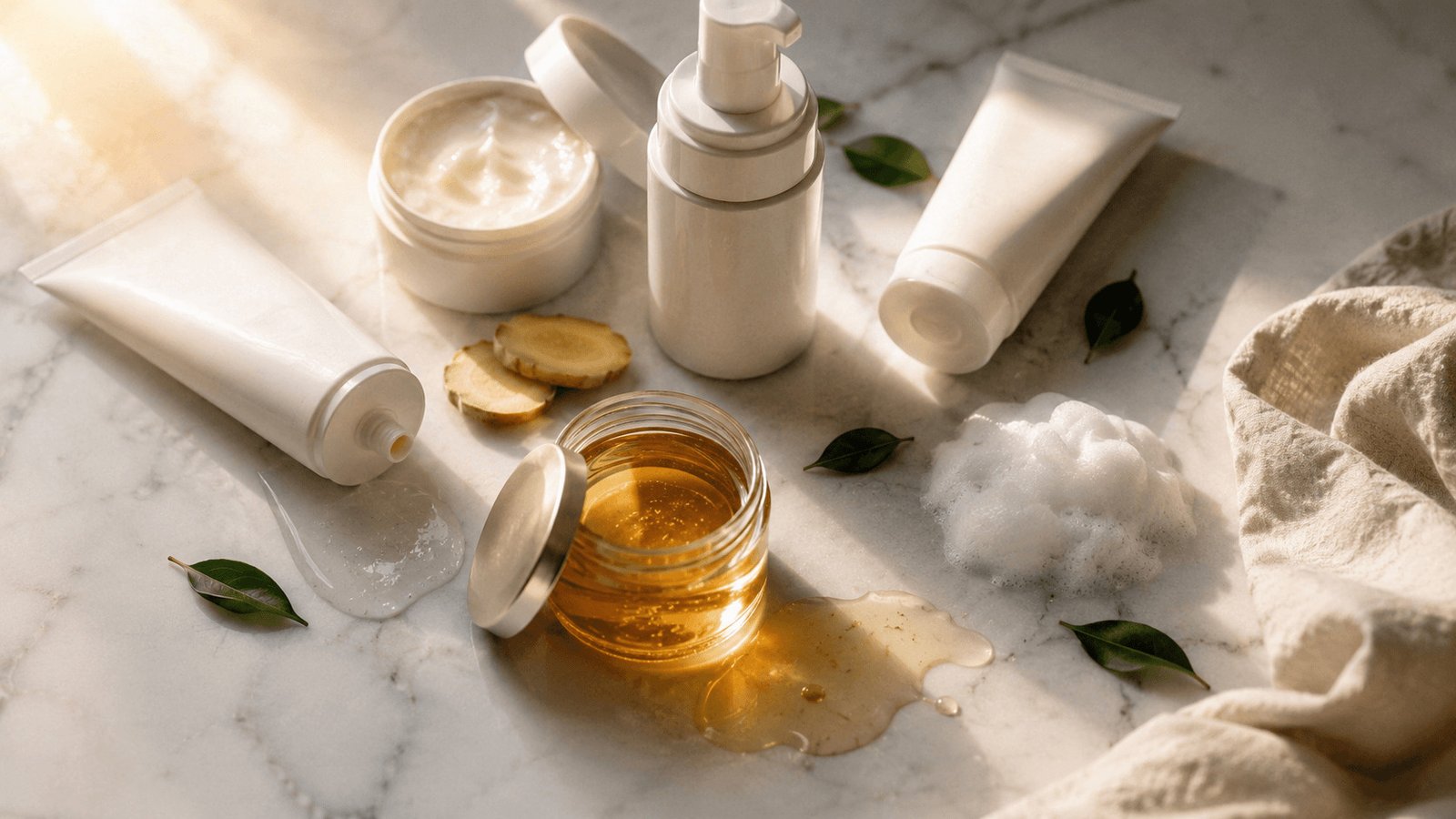
I used the same foaming cleanser for four years before it occurred to me that it might be the problem.
It was a popular drugstore cleanser, the kind that produces a satisfying lather and leaves your face feeling squeaky clean afterward. I associated that squeaky feeling with effectiveness — surely if my skin felt that thoroughly stripped, it was actually clean.
What I didn’t connect for far too long was that my skin was perpetually a little tight, a little reactive, and prone to producing extra oil by the afternoon that I assumed was just “my skin type” rather than a direct response to what I was washing it with twice a day.
Switching to a proper Korean cleanser — low pH, gentle, formulated to clean without stripping — was honestly one of those changes where I felt the difference within the first week and couldn’t quite believe four years had gone by without questioning it. My skin stopped overproducing oil. The tightness disappeared.
Everything I applied afterward seemed to work better, which makes sense once you understand that a damaged starting point undermines every step that follows it.
Cleanser is the most underrated product in any skincare routine because it doesn’t feel like it’s doing much beyond the obvious. But the wrong cleanser can quietly undo the benefit of every other carefully chosen product in your routine, twice a day, every single day.
Here is what actually works, organized honestly by skin type.
Why Korean Cleansers Are Genuinely Different
The defining feature of Korean cleansers is pH — most are formulated at a slightly acidic pH between 5 and 6, which matches your skin’s natural acid mantle far more closely than the alkaline pH 9 to 10 of traditional soap-based Western cleansers.
That acid mantle is your skin’s first line of defense — a thin protective film that keeps moisture in and bacteria out.
Alkaline cleansers disrupt this balance with every wash, and your skin spends time afterward trying to restore it before your next cleanse undoes the progress again. Low pH cleansing breaks that cycle.
The other defining feature is the double cleanse philosophy — an oil-based first cleanse followed by a water-based second cleanse. Oil-based cleansers work through the principle of “like dissolves like,” meaning they bind to oils and impurities on the skin, lifting them away when emulsified with water.
This ensures a thorough cleanse without excessive rubbing or harsh surfactants, both of which can strip your skin and lead to irritation.
This two-step approach exists because sunscreen, sebum, and pollution particles are largely oil-soluble — a water-based cleanser alone struggles to remove them completely, which is why “I washed my face” often still leaves residue that shows up over time as texture and congestion.
Oil Cleansers vs Water Cleansers — What Each Actually Does
Oil cleansers are your first step, used primarily in the evening. They dissolve sunscreen, makeup, and the day’s accumulated sebum without stripping the skin. Apply to completely dry skin, massage to dissolve makeup and impurities, then add water to emulsify before rinsing thoroughly.
The formula should turn milky white when mixed with water — that emulsification is the sign of proper formulation, rinsing cleanly without oily residue.
Water cleansers follow the oil cleanse to remove any remaining residue and provide the final deep clean. These are also your standalone morning cleanser, since you typically don’t need a full double cleanse first thing in the day.
You don’t always need both. If your skin leans dry or sensitive, you may be able to skip the second cleanse, particularly in the morning or on makeup-free days. The double cleanse matters most in the evening, especially if you’ve worn sunscreen or makeup.
Properly cleansed skin also absorbs weekly treatments more effectively — my guide on the best Korean sheet masks covers how to layer them after a thorough double cleanse for maximum results.
Best Korean Oil Cleansers on Amazon
Best Overall — Heimish All Clean Balm
This balm-to-oil cleanser remains my most consistent recommendation for a first double-cleanse step, regardless of skin type. The balm texture melts on contact with skin warmth, breaks down sunscreen and makeup thoroughly within a sixty-second massage, and emulsifies completely with water leaving zero residue.
It works across oily, dry, combination, and normal skin without adjustment — which makes it the single safest starting recommendation if you’ve never tried oil cleansing before and aren’t sure which texture or formula suits you.
Price: Around $16 Best for: All skin types, oil cleanse beginners Amazon availability: ✅ Prime shipping
This balm works particularly well for combination skin since it cleanses both the oily T-zone and drier cheeks without needing two separate products — covered in detail in my guide on Korean skincare for combination skin.
Best for Sensitive Skin — Ma:nyo Pure Cleansing Oil
Ma:nyo Pure Cleansing Oil is probably the number one cleansing oil in Korea, with over ten million units sold and a reputation in Korean beauty communities as something close to a holy grail product.
The formula uses fourteen seed oils and herb extracts to dissolve makeup while maintaining skin moisture throughout the cleanse.
For sensitive skin specifically, this is the gentlest oil cleanser I’ve tested — the multi-oil blend nourishes rather than just dissolves, leaving skin comfortable rather than reactive afterward. If your skin tends to flare up after cleansing, this formula’s gentleness makes a measurable difference.
Price: Around $20 Best for: Sensitive, reactive, dry skin Amazon availability: ✅ Prime shipping
Best for Combination and Oily Skin — Anua Heartleaf Pore Control Cleansing Oil
Anua’s cleansing oil targets pore concerns specifically with heartleaf — houttuynia cordata — extract. It dissolves blackheads and excess sebum while the anti-inflammatory heartleaf simultaneously soothes any reactivity from the cleansing process itself.
I covered Anua’s heartleaf line extensively in my guide on Korean skincare for acne prone skin — this cleansing oil fits naturally into that routine because it addresses the oil and congestion that oily, acne-prone skin deals with daily, without the stripping that makes acne-prone skin overproduce oil in compensation.
Price: Around $19 Best for: Oily, combination, acne-prone, congested pores Amazon availability: ✅ Prime shipping
Best for Dry Skin — Beauty of Joseon Radiance Cleansing Balm
This balm cleanser combines effective makeup and sunscreen removal with ginseng and rice bran extract that simultaneously brighten and nourish during the cleanse — a genuinely useful dual benefit for dry skin that needs gentleness above everything else.
I covered rice extract’s brightening properties in my guide on Korean skincare for dark spots — getting that benefit even at the cleansing stage of your routine is an efficient bonus rather than the primary reason to choose this product, but it’s a meaningful one for dry skin pursuing both hydration and tone improvement.
Price: Around $17 Best for: Dry, dehydrated, dull skin wanting brightening benefits Amazon availability: ✅ Prime shipping
Best Lightweight Hybrid — Torriden Dive-In Cleansing Oil
Torriden applies their signature low-molecular hyaluronic acid technology to a cleansing oil, creating a formula that hydrates while it cleanses. The water-oil hybrid texture appeals to people who find traditional cleansing oils too heavy or greasy-feeling during application.
I covered Torriden’s hyaluronic acid expertise in my guide on the best Korean toners — the same hydration-focused formulation philosophy carries through to their cleansing oil, making it a good choice for anyone who wants the double cleanse benefits without the heavier oil texture some formulas have.
Price: Around $19 Best for: Dehydrated skin, anyone who dislikes heavy oil cleanser textures Amazon availability: ✅ Prime shipping
Best Korean Water Cleansers on Amazon
Best Overall — COSRX Low pH Good Morning Gel Cleanser
This remains the cleanser I’ve recommended most consistently across this entire blog, and it deserves the repetition here because it genuinely is one of the best value water cleansers available.
I covered it fully in my COSRX skincare review — the low pH 5.0 formula cleans thoroughly without disrupting your acid mantle, and the gel texture works for most skin types without adjustment.
A single tube lasts two to three months with daily use at around fourteen dollars — roughly fifteen cents per wash for a genuinely well-formulated, dermatologically-conscious cleanser.
Price: Around $14 Best for: Oily, combination, normal skin — universal recommendation Amazon availability: ✅ Prime shipping
Best for Sensitive and Barrier-Damaged Skin — Etude House SoonJung pH 6.5 Whip Cleanser
Built specifically for compromised and sensitive skin, this whip cleanser produces a gentle low lather at a pH that won’t disrupt the acid mantle, with panthenol and madecassoside providing anti-inflammatory benefits during the cleanse itself.
I cover exactly how panthenol and every other major Korean skincare ingredient works in my Korean skincare ingredients explained guide if you want the full breakdown.
I cover this product as a foundational recommendation in my guide on how to fix a damaged skin barrier — when your skin needs to heal, the cleanser you choose either supports that recovery or actively works against it, and this formula is consistently the safest choice for compromised skin.
Price: Around $13 Best for: Sensitive, reactive, barrier-damaged skin Amazon availability: ✅ Prime shipping
Best for Oily Skin and Blackheads — Some By Mi Bye Bye Blackhead 30 Days Miracle Foam Cleanser
The same brand behind the wildly popular AHA BHA PHA toner applies similar exfoliating philosophy to a foam cleanser specifically targeting blackheads and congested pores.
The formula includes salicylic acid alongside tea tree, addressing oil control and gentle exfoliation in the same step.
For oily skin dealing with persistent blackheads — a concern I covered extensively in my guide on Korean skincare for acne prone skin — this foam cleanser provides a meaningful upgrade over a purely gentle cleanser when congestion is your primary issue.
Price: Around $13 Best for: Oily, acne-prone, blackhead-prone skin Amazon availability: ✅ Prime shipping
Best for Dry Skin — Round Lab Birch Juice Moisturizing Cleanser
Round Lab’s birch sap formula prioritizes hydration alongside cleansing, which makes it one of the few water cleansers genuinely suitable for dry skin to use without that post-cleanse tightness most foam and gel cleansers cause.
I covered Round Lab’s birch juice line in my guide on Korean skincare for dry skin — the same hydrating philosophy extends from their moisturizer to their cleanser, making it easy to build a consistent dry-skin-focused routine across multiple steps from one brand.
Price: Around $15 Best for: Dry, dehydrated, normal skin Amazon availability: ✅ Prime shipping
This same hydrating formula approach works particularly well for post-shave skin too — I cover the complete approach to Korean skincare for men including post-shave cleansing in my dedicated guide.
Best Minimal Ingredient Formula — Krave Beauty Matcha Hemp Hydrating Cleanser
For anyone who wants the absolute simplest possible ingredient list — this cleanser uses hemp seed oil and matcha in a creamy, low-lather formula that’s become a favorite specifically among people with very sensitive or ingredient-cautious skin.
For the complete sensitive skin approach beyond just cleansing my guide on Korean skincare for sensitive skin covers every step from toner through moisturizer for genuinely reactive skin.
It doubles effectively as both a gentle morning cleanser and the second step of an evening double cleanse for dry to normal skin, which makes it efficient if you’re trying to minimize the total number of products in your routine.
Price: Around $22 Best for: Sensitive, dry, minimal-ingredient seekers Amazon availability: ✅ Prime shipping
For a premium cleansing option Laneige also makes an excellent cleanser within their broader range — I cover their full product line honestly in my Laneige skincare review.
Quick Reference — Which Cleanser for Which Skin Type
| Skin Type | Oil Cleanser | Water Cleanser |
|---|---|---|
| Oily/Acne-prone | Anua Heartleaf Pore Control | Some By Mi Bye Bye Blackhead |
| Dry | Beauty of Joseon Radiance Balm | Round Lab Birch Juice |
| Sensitive | Ma:nyo Pure Cleansing Oil | Etude SoonJung Whip Cleanser |
| Combination | Heimish All Clean Balm | COSRX Low pH Cleanser |
| Normal/All types | Heimish All Clean Balm | COSRX Low pH Cleanser |
All of these are among the most popular Korean skincare products on Amazon right now — consistently bestselling in the cleanser category with thousands of verified reviews behind each pick.
For building a complete cleansing routine on a budget, my guide on affordable Korean skincare under $20 covers most of these options comfortably within that price range.
How to Double Cleanse Correctly
This technique sounds simple but small details make a meaningful difference to the result. This technique is the foundation of the evening sequence I cover in my Korean skincare night routine guide — every other step performs better once this one is done properly.
Step 1 — Oil cleanser on completely dry skin. Wet hands or a wet face dilutes the oil and reduces its effectiveness at dissolving sunscreen and makeup. Apply to bone-dry skin and hands.
Step 2 — Massage for sixty to ninety seconds. This isn’t a quick step — the massage time is what actually breaks down the day’s buildup. Use gentle circular motions, paying extra attention to areas with heavier makeup or sunscreen application.
Step 3 — Add a small amount of water and continue massaging. This is the emulsification step — the oil should turn milky as it mixes with water. Continue for another fifteen to twenty seconds until the texture has fully transformed.
Step 4 — Rinse thoroughly with lukewarm water. Hot water strips the lipid layer you’re trying to preserve. Make sure all oil residue is rinsed before moving to your second cleanse.
Step 5 — Apply your water-based cleanser. Thirty to sixty seconds, gentle circular motion, lukewarm water rinse. Your skin should feel clean and comfortable afterward — never tight or squeaky.
Be gentle around the eye area specifically during this step — for a dedicated treatment beyond cleansing my guide on the best Korean eye creams on Amazon covers the delicate periorbital skin in full detail.
A common mistake is rushing the oil cleanse step or skipping the water dilution stage entirely, leaving residue behind that the second cleanser then has to work harder to remove — partially undoing the gentleness that made the oil cleanse worthwhile in the first place.
Once your cleanser is right the next biggest impact comes from your moisturizer — my guide on the best Korean moisturizers on Amazon covers every option by skin type.
Mistakes Worth Avoiding
Using a high pH cleanser daily without realizing it. Most drugstore foaming cleansers and bar soaps sit at pH 9 to 10. Check ingredient lists or product descriptions for “low pH” or “pH balanced” labeling — this single detail affects how your entire routine performs.
Skipping the oil cleanse because it feels like an extra step.
If you wear sunscreen daily — which you should, as I cover throughout my guide on the best Korean sunscreen for oily skin — a single water-based cleanse genuinely doesn’t remove it completely. The residue accumulates over time as texture and congestion that no amount of serum fixes.
Over-cleansing. More than twice daily strips the barrier and triggers the compensatory oil production cycle that keeps oily skin perpetually oily. Morning rinse or gentle cleanse, evening double cleanse — that’s sufficient for almost everyone.
Using hot water. This bears repeating in every cleansing context because it’s such a consistently overlooked detail. Hot water dissolves the lipid barrier the same way it dissolves grease on dishes. Lukewarm only, every time.
Choosing a cleanser based on lather alone. The satisfying foam feeling many people associate with “clean” is often a sign of harsher surfactants rather than better cleansing. Gentle, low-lather, or balm formulas frequently clean just as effectively without the stripping side effect.
This matters even more for mature skin where unnecessary friction and stripping accelerates the visible aging I cover in my Korean anti-aging skincare guide.
FAQs About Korean Cleansers
Do I really need to double cleanse every single day?
In the evening, if you wear sunscreen or makeup — yes, consistently. In the morning, a single gentle cleanse or even just a lukewarm water rinse is usually sufficient since you haven’t accumulated the same buildup overnight.
I cover the complete morning sequence including exactly where cleansing fits in my Korean skincare morning routine guide.
Can oil cleansers be used on oily skin?
Yes — cleansing oils can suit oily skin as they effectively remove sebum and makeup without stripping natural moisture, but choose non-comedogenic formulas like the ones recommended above rather than heavy mineral oil based options.
How do I know if my cleanser’s pH is too high?
If your skin feels tight, squeaky, or uncomfortable within a few minutes of cleansing, that’s usually a sign the pH is too alkaline for your skin’s natural balance. A properly formulated low pH cleanser should leave skin feeling clean but comfortable, never tight.
Is it bad to use the same cleanser for years?
Not necessarily, if it’s working well and your skin isn’t showing signs of irritation or imbalance. Unlike actives where rotation sometimes helps, a gentle, well-formulated cleanser that suits your skin can be a long-term staple rather than something you need to constantly switch.
How long does a Korean cleanser typically last?
Water-based cleansers in 100ml to 150ml bottles typically last two to three months with twice-daily use. Oil cleansers and balms in similar sizes last roughly the same, slightly longer if used only in the evening.
Four Years Later
I think about those four years with the wrong cleanser more than I probably should, mostly because the fix was so simple once I actually looked into it. Not an expensive serum. Not a complicated routine overhaul. Just a cleanser at the right pH, used correctly, twice a day.
Everything downstream of that change worked better — not because the other products improved, but because they were finally being applied to skin that wasn’t fighting a low-grade barrier disruption every single morning and evening.
This is also the foundation principle I cover in my glass skin routine guide — that reflective glow simply is not achievable on skin that has been stripped at the very first step.
If there’s one product worth getting right before anything else in your Korean skincare routine for beginners, it’s this one.
The most expensive serum in the world performs worse on skin that’s been stripped by the wrong cleanser than the most affordable serum performs on skin that’s been properly, gently cleaned.
Start there. Everything else builds on it.
7 thoughts on “Best Korean Cleansers on Amazon — Honest Reviews for Every Skin Type”