
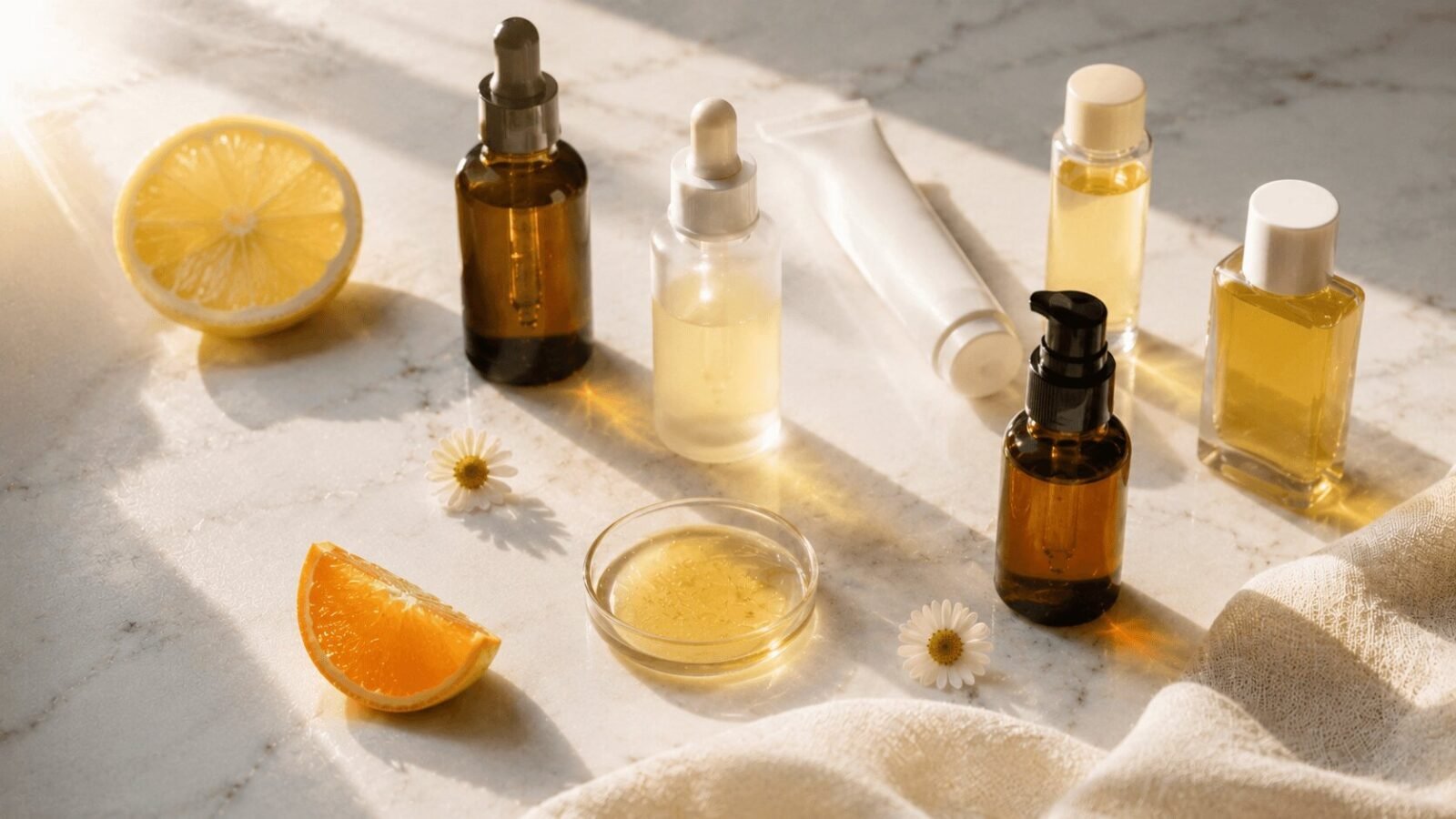
I have bought and thrown away more vitamin C serums than any other skincare product.
Not because I didn’t like vitamin C — I understood what it was supposed to do and genuinely wanted it to work. But the pattern was always the same. Open the bottle. Use it for two weeks. Notice that it’s turned from pale yellow to orange-brown. Throw it away. Buy a different brand. Repeat.
One bottle stung enough on application that I stopped using it after five days. One produced a breakout along my jaw that took three weeks to resolve. One did nothing visible for six weeks and then oxidized before I could determine whether it was working.
Most Western formulas rely on L-ascorbic acid at high concentrations — powerful but notoriously unstable and irritating. Korean skincare takes a very different approach, and it’s one worth knowing about.
The shift to Korean vitamin C serums started as a budget experiment. It turned into a permanent change when I realized that the stable derivative formulas Korean brands had been using for years were producing better actual results on my skin than the expensive unstable Western formulas I kept replacing every month.
Here is everything I wish I’d understood about this ingredient category before spending three years buying the wrong versions.
What Vitamin C Actually Does — And Why It Keeps Failing
Vitamin C in skincare does three meaningful things: it inhibits melanin production which fades existing dark spots and prevents new ones, it provides antioxidant protection against UV-triggered free radical damage, and it stimulates collagen synthesis which improves skin firmness and texture over time.
The problem is that vitamin C — particularly in its most effective pure form — is profoundly unstable.
Pure L-ascorbic acid is potent but unstable. Packaging stability is critical — opaque, air-restrictive packaging such as pumps, dark glass, or tubes protects vitamin C from oxidation.
Exposure to air, light, and heat causes L-ascorbic acid to oxidize. Oxidized vitamin C doesn’t just stop working — it can actually cause free radical damage on skin, which is the opposite of what you’re applying it for. That orange-brown color in the bottle isn’t just aesthetic degradation. It’s functional degradation.
This oxidation problem explains most people’s vitamin C serum failures — the product stopped working weeks before you finished it, and you couldn’t tell because the change was gradual.
Forms of Vitamin C — The Honest Explanation
K-beauty brands have largely moved away from pure L-ascorbic acid and toward stable Vitamin C derivatives — forms like Ethyl Ascorbyl Ether, 3-O-Ethyl Ascorbic Acid, and Ascorbyl Glucoside that are gentler on the skin, less prone to oxidation, and suitable for daily use without the stinging or purging phase. The trade-off? Slightly slower results.
Understanding the difference between these forms is genuinely important for choosing the right product for your specific situation.
L-ascorbic acid (LAA) — the original, most studied form. Most effective at equivalent concentrations. Requires a low pH (under 3.5) for proper skin absorption, which is why pure vitamin C serums sting on application. Highly unstable. Best for experienced users with non-sensitive skin who want maximum potency and can commit to proper storage and fast use. Derivatives like Sodium Ascorbyl Phosphate and Ethyl Ascorbic Acid are 40 to 60% as effective as L-ascorbic acid but far more stable.
Ethyl Ascorbic Acid (3-O-Ethyl Ascorbic Acid) — the most widely used derivative in Korean formulations. Stable at neutral pH, converts to L-ascorbic acid after skin absorption, produces genuine brightening over consistent use. Significantly less irritating than pure L-ascorbic acid.
Ascorbyl Glucoside — the gentlest vitamin C derivative. Excellent for sensitive and reactive skin. Slowest results but the best tolerated. The beginner entry point before stronger forms.
Sodium Ascorbyl Phosphate (SAP) — water-soluble, stable, gentle. Particularly good for acne-prone skin because it has some antimicrobial properties alongside its brightening action.
Niacinamide and tranexamic acid — technically not vitamin C but address the same brightening concerns through different mechanisms. Niacinamide and glutathione brighteners avoid the oxidation problem entirely. Korean brands frequently combine these with vitamin C derivatives for multi-pathway brightening that outperforms either ingredient alone.
If pure L-ascorbic acid is the espresso shot of vitamin C, derivatives are the cold brew — smoother, easier to handle, and they still get the job done.
Best Korean Vitamin C Serums on Amazon — Reviewed Honestly
Best Overall — Numbuzin No.5 Vitamin Concentrated Serum
Numbuzin No.5 Serum combines tranexamic acid 4%, niacinamide 5%, glutathione, and vitamin C in a lightweight gel — Vogue’s Best Brightening pick. It targets hyperpigmentation and uneven tone with panthenol and ceramides for soothing hydration.
This is the serum that replaced three of my previous vitamin C purchases and the formula I recommend first to anyone who has experienced the oxidation and irritation frustrations I described. By combining tranexamic acid, niacinamide, glutathione, and vitamin C derivatives in one formula — it takes a multi-pathway approach to brightening that doesn’t rely on the instability of pure L-ascorbic acid.
The result is a serum that produces visible brightening over four to six weeks without oxidation anxiety, without stinging, and without the adjustment period that pure L-ascorbic acid requires.
I cover tranexamic acid’s specific mechanism in my guide on Korean skincare for dark spots — it inhibits the enzyme that triggers melanin overproduction, working differently from niacinamide’s melanin transfer inhibition. Combining them produces faster results than either alone.
Price: Around $18 to $20 Best for: All skin types — especially those who’ve had bad experiences with other vitamin C serums Form: Vitamin C derivative plus niacinamide and tranexamic acid Stable: ✅ No oxidation concern Amazon availability: ✅ Prime shipping
Best for Beginners — Klairs Freshly Juiced Vitamin Drop
DearKlairs Freshly Juiced Vitamin Drop at around $16 is a beginner option with stable ascorbyl glucoside.
Klairs has built a reputation specifically for formulating effective actives in sensitive-skin-compatible formats — and this vitamin C serum fits that pattern exactly. Low-percentage vitamin C at a stable derivative form, gentle enough for first-time vitamin C users, and priced as a genuinely accessible entry point.
For anyone who wants to introduce vitamin C without the adjustment period or irritation risk of higher-percentage formulas — this is the specific recommendation I make before anything stronger. I cover the gentle approach for reactive skin in my guide on Korean skincare for sensitive skin — the same principles apply to vitamin C introduction.
Price: Around $16 to $17 Best for: Beginners, sensitive skin, vitamin C introduction Form: Ascorbyl glucoside — gentlest derivative Stable: ✅ Yes Amazon availability: ✅ Prime shipping
Best for Hyperpigmentation — Goodal Green Tangerine Vita C Dark Spot Serum
Goodal Green Tangerine Vita C Dark Spot Serum is specifically formulated for hyperpigmentation — unripe green tangerine extract provides vitamin C alongside targeted brightening actives for dark spot correction.
For established hyperpigmentation rather than general brightening maintenance — this formula’s more targeted approach produces faster visible change on existing marks than the general brightening serums above.
Green tangerine is naturally rich in vitamin C alongside other brightening botanicals — and the unripe tangerine concentration is specifically chosen because unripe citrus fruit contains significantly higher vitamin C levels than ripe fruit.
I cover the full hyperpigmentation treatment approach in my guide on Korean skincare for dark spots — this serum sits within that routine as the vitamin C step working alongside niacinamide and SPF for comprehensive mark fading.
Price: Around $32 Best for: Established dark spots, hyperpigmentation, post-acne marks Form: Natural vitamin C from green tangerine plus derivatives Amazon availability: ✅ Prime shipping
Best High-Potency — COSRX The Vitamin C 23 Serum
COSRX The Vitamin C 23 Serum is the Korean equivalent of SkinCeuticals CE Ferulic at significantly lower cost. It is for experienced vitamin C users.
At 23% pure L-ascorbic acid — this is the most potent pure vitamin C formula on this list and the Korean equivalent of the most recommended (and most expensive) Western vitamin C serum. For experienced vitamin C users with established tolerance who want maximum potency — this is the recommendation.
I cover the full COSRX range in my COSRX skincare review — the Vitamin C 23 Serum is their most technically sophisticated formula and the one that requires the most careful handling and storage.
If vitamin C has previously irritated and damaged your barrier my complete guide on how to fix a damaged skin barrier covers the recovery process before reintroducing any active serum.
The honest caveats: introduce slowly, store in a cool dark location, use within three to four months of opening, expect a brief adjustment period of mild tingling or light sensitivity. For anyone new to vitamin C — the other options on this list are more appropriate starting points.
Price: Around $25 Best for: Experienced vitamin C users, maximum brightening and antioxidant protection Form: 23% pure L-ascorbic acid Stable: ⚠️ Requires proper dark cool storage — use within 3-4 months Amazon availability: ✅ Prime shipping
Best for Oily and Acne-Prone Skin — Some By Mi Yuja Niacin Brightening Serum
For oily and acne-prone skin specifically — combining vitamin C benefits with niacinamide and yuzu extract rather than pure L-ascorbic acid avoids the potential irritation and pore congestion risk that some LAA formulas cause on acne-prone skin.
I cover the oily skin routine in full in my guide on Korean skincare for oily skin — vitamin C in a lightweight non-comedogenic formula sits comfortably in that morning routine without contributing to the congestion or oiliness that some vitamin C formulas trigger.
Price: Around $22 Best for: Oily, acne-prone skin wanting brightening without irritation Form: Vitamin C derivatives plus niacinamide Amazon availability: ✅ Prime shipping
Best for Dry and Mature Skin — iUNIK Propolis Vitamin Synergy Serum
For dry or mature skin wanting vitamin C benefits alongside intensive hydration — this formula combines propolis extract, vitamin C, and beta-glucan in a slightly richer texture that suits dry skin better than the gel or watery formulas above.
I cover this product in my Korean skincare routine for over 40 as a brightening option that simultaneously addresses the hydration needs of mature skin. The propolis component adds antimicrobial and healing properties that make this equally appropriate for any skin type experiencing occasional breakouts alongside dryness.
Price: Around $17 Best for: Dry, mature skin, combination of brightening and hydration Form: Vitamin C derivatives plus propolis Amazon availability: ✅ Prime shipping
Best Budget — Beauty of Joseon Glow Serum
Beauty of Joseon Glow Serum is niacinamide-forward with vitamin C cocktail. Cheaper than dedicated vitamin C but produces comparable glow results for most skin types. New to vitamin C — this is the ideal starting point.
Technically not a pure vitamin C serum — but the niacinamide plus propolis plus vitamin C derivative combination produces the brightening and glow results that most people buy vitamin C for, without the price, instability, or irritation concerns of dedicated vitamin C formulas.
For anyone building a Korean routine on a budget — which I cover in full in my guide on Korean skincare on a budget — this does the brightening work of a vitamin C serum at a lower price with zero oxidation risk.
Price: Around $17 Best for: Budget-conscious, beginners, niacinamide-preferred brightening Stable: ✅ No oxidation concern Amazon availability: ✅ Prime shipping
Quick Reference Table
| Product | Best For | Vitamin C Form | Price |
|---|---|---|---|
| Numbuzin No.5 | All types, multi-pathway | Derivative + TXA + niacinamide | $18-$20 |
| Klairs Freshly Juiced Drop | Beginners, sensitive | Ascorbyl glucoside | $16-$17 |
| Goodal Green Tangerine | Dark spots, hyperpigmentation | Natural + derivatives | $32 |
| COSRX Vitamin C 23 | Experienced users, maximum potency | 23% L-ascorbic acid | $25 |
| Some By Mi Yuja Niacin | Oily, acne-prone | Derivatives + niacinamide | $22 |
| iUNIK Propolis Vitamin | Dry, mature skin | Derivatives + propolis | $17 |
| Beauty of Joseon Glow | Budget, beginners | Niacinamide-led brightening | $17 |
All of these are among the most popular Korean skincare products on Amazon right now — consistently well reviewed with thousands of verified repurchases behind each recommendation.
How to Use Vitamin C Correctly
Morning only. Vitamin C belongs in your AM routine — after toner, before SPF. The antioxidant protection synergizes with sunscreen for significantly better UV defense. Using vitamin C in the evening alongside retinol creates ingredient conflict — and vitamin C’s primary job of antioxidant protection during UV exposure is irrelevant while you sleep. I cover this timing rule in my guide on Korean skincare for acne prone skin and again in my Korean skincare night routine guide.
The complete morning routine structure including exactly where vitamin C fits between every other step is covered in my Korean skincare morning routine guide.
Apply to dry or slightly damp skin after toner. For L-ascorbic acid formulas specifically — application to skin that’s still wet from toner dilutes the formula and affects the pH environment needed for absorption. For derivative formulas — slightly damp skin is fine.
Wait sixty seconds before the next product. Vitamin C applied directly underneath SPF or moisturizer without absorption time doesn’t penetrate properly.
Pair with SPF every single time. Pair AM vitamin C with Korean SPF for results over 4 to 8 weeks. Vitamin C works most effectively when the free radical damage it’s providing antioxidant protection against is being simultaneously blocked by SPF. One without the other produces significantly less benefit than both together.
Store correctly. Vitamin C stays more stable at cooler temperatures. Refrigeration is most useful in summer or warm climates. In a cool bathroom drawer, vitamin C serums typically last 6 to 8 months if used within that window. Discard if the serum turns noticeably yellow or orange.
For a complete guide to every other Korean serum category beyond vitamin C my guide on the best Korean serums on Amazon covers every concern from niacinamide to peptides to centella.
Don’t combine with niacinamide at the same time if using pure LAA. This concern has been largely debunked at modern formulation standards — but if you notice flushing from the combination, separate them into morning and evening.
What Vitamin C Cannot Do — Honest Expectations
Vitamin C doesn’t eliminate deep structural wrinkles. It doesn’t permanently prevent hyperpigmentation — it requires consistent ongoing use to maintain results. It doesn’t work as quickly as prescription brightening treatments like hydroquinone.
What it does do consistently over four to eight weeks of daily use: reduces the appearance of mild to moderate dark spots, improves overall skin brightness and evenness, provides meaningful antioxidant protection against cumulative UV damage, and supports the collagen production that keeps skin firm over time.
Taking a photo on day one in consistent lighting is genuinely useful — the changes accumulate gradually enough that you often adjust to them and stop noticing without a before comparison.
FAQs About Korean Vitamin C Serums
Should I use vitamin C serum if I already use niacinamide? Yes — they work through different mechanisms and complement each other well. Niacinamide inhibits melanin transfer; vitamin C inhibits melanin production. Applied together or in the same routine they address hyperpigmentation from multiple angles.
How do I know if my vitamin C serum has oxidized? Pale yellow is normal. Noticeably orange or brown means the formula has oxidized beyond effective use. The smell may also become slightly unpleasant. When in doubt — replace it.
Can teenagers use vitamin C serum? Yes — vitamin C is one of the gentlest actives and appropriate for teenage skin. I cover this in my Korean skincare routine for teenagers — starting with a derivative formula rather than high-percentage L-ascorbic acid is the appropriate approach for younger skin.
How long before vitamin C serum shows results? Antioxidant protection is immediate. Visible brightening typically appears at four to six weeks of consistent daily morning use. Significant dark spot fading takes eight to twelve weeks.
Is expensive vitamin C better than affordable Korean options? COSRX The Vitamin C 23 Serum is the Korean equivalent of SkinCeuticals CE Ferulic at significantly lower cost. For pure L-ascorbic acid — Korean formulas at significantly lower price points deliver equivalent results. For stable derivative formulas — the price difference between Korean and Western options is even more dramatic with Korean options consistently outperforming on stability.
From Three Years of Waste to One Serum That Works
The twelve discarded vitamin C serums from my pre-Korean-skincare period represent a specific kind of expensive lesson — buying the same product category repeatedly while the fundamental problem (instability, irritation, poor formulation) remained unchanged.
The switch to Korean vitamin C — specifically to stable derivative formulas that don’t require the careful temperature management and rapid use that pure L-ascorbic acid demands — ended that cycle entirely.
Start with the Numbuzin No.5 if you want the most comprehensive multi-pathway approach, Start with the Klairs Drop if you want the gentlest possible introduction, Start with the COSRX 23 only if you’ve already used lower-percentage formulas without issue and want maximum potency.
Apply every morning after toner. Apply SPF after. Give it eight weeks.
The brightness you’ve been trying to buy with unstable formulas that oxidize before you finish them has been available in stable Korean formulations this entire time.
2 Comments